Open Funk
re:Mix: engineering a jar-coupling mechanism and motor system for Open Funk's repairable, 3D-printed kitchen blender

Case Overview
Voxdale partnered with Open Funk on re:Mix, an open-source, repairable kitchen blender that screws onto any standard glass jar, re-engineering the jar-coupling mechanism, motor and safety specification so the design stays reliable across 3D-printed production runs.
Sector
Consumer / Lifestyle
Client
Open Funk, developer of re:Mix, an open-source, repairable kitchen blender (openfunk.co)
Product
re:Mix, a kitchen blender that attaches to standard glass jars via an 82mm twist-off lid, instead of a proprietary pitcher
Voxdale role
Jar-coupling and lid mechanism design, motor selection and noise suppression, electrical/safety specification, CFD thermal simulation of the motor
Technologies
Re-engineered jar-coupling and lid mechanism · motor selection and noise suppression · wiring, rating and safety specification · CFD thermal simulation
How we worked
Embedded in Open Funk's own team, daily contact, short agile iterations, June–October 2022
Hardest challenge
Keeping the jar-coupling and drivetrain mechanisms safe and CE-certifiable when produced by repeated 3D printing rather than injection moulding, while staying simple enough for a home user to repair.
Case Overview
Voxdale partnered with Open Funk on re:Mix, an open-source, repairable kitchen blender that screws onto any standard glass jar, re-engineering the jar-coupling mechanism, motor and safety specification so the design stays reliable across 3D-printed production runs.
Sector
Consumer / Lifestyle
Client
Open Funk, developer of re:Mix, an open-source, repairable kitchen blender (openfunk.co)
Product
re:Mix, a kitchen blender that attaches to standard glass jars via an 82mm twist-off lid, instead of a proprietary pitcher
Voxdale role
Jar-coupling and lid mechanism design, motor selection and noise suppression, electrical/safety specification, CFD thermal simulation of the motor
Technologies
Re-engineered jar-coupling and lid mechanism · motor selection and noise suppression · wiring, rating and safety specification · CFD thermal simulation
How we worked
Embedded in Open Funk's own team, daily contact, short agile iterations, June–October 2022
Hardest challenge
Keeping the jar-coupling and drivetrain mechanisms safe and CE-certifiable when produced by repeated 3D printing rather than injection moulding, while staying simple enough for a home user to repair.
Case Overview
Voxdale partnered with Open Funk on re:Mix, an open-source, repairable kitchen blender that screws onto any standard glass jar, re-engineering the jar-coupling mechanism, motor and safety specification so the design stays reliable across 3D-printed production runs.
Sector
Consumer / Lifestyle
Client
Open Funk, developer of re:Mix, an open-source, repairable kitchen blender (openfunk.co)
Product
re:Mix, a kitchen blender that attaches to standard glass jars via an 82mm twist-off lid, instead of a proprietary pitcher
Voxdale role
Jar-coupling and lid mechanism design, motor selection and noise suppression, electrical/safety specification, CFD thermal simulation of the motor
Technologies
Re-engineered jar-coupling and lid mechanism · motor selection and noise suppression · wiring, rating and safety specification · CFD thermal simulation
How we worked
Embedded in Open Funk's own team, daily contact, short agile iterations, June–October 2022
Hardest challenge
Keeping the jar-coupling and drivetrain mechanisms safe and CE-certifiable when produced by repeated 3D printing rather than injection moulding, while staying simple enough for a home user to repair.
Executive Summary
Open Funk builds re:Mix, an open-source, repairable kitchen blender that screws directly onto any standard 82mm twist-off glass jar instead of a proprietary pitcher — turning a container people already own into the blending vessel.
The product's promise of being repairable and modular only holds up if the mechanism gripping the jar, and the motor behind it, stay safe and reliable across parts that are 3D-printed rather than injection moulded — and can still meet CE requirements that were never written with 3D printing in mind.
Voxdale joined Open Funk's own team, working in short, daily feedback loops to re-engineer the jar-coupling and lid mechanism, define the motor, wiring and safety specification, and validate the motor's thermal behaviour through CFD simulation.
Executive Summary
Executive Summary
Client Context
Open Funk builds re:Mix (openfunk.co). Instead of a proprietary pitcher, re:Mix screws directly onto any standard glass jar with an 82mm twist-off lid — jam jars, pickle jars and similar containers people already own — so the blender itself becomes reusable, packaging-agnostic hardware.
The housing is made from recycled and bio-based materials, the base is modular and tool-free to service, and a QR code on the unit links to a repair guide and product passport — a product built around repairability from the ground up.
Client Context
Client Context
The Technical Brief
A jar-coupling and lid mechanism that locks reliably and safely onto glass jars of varying shape, wall thickness and manufacturing tolerance
Motor selection with adequate noise suppression
Wiring, rating and other technical specifications for safe operation
Thermal validation of the motor inside a compact housing
The Technical Brief
The Technical Brief
The Harder, Less Obvious Part
Three constraints pulled against each other:
Print-to-print variability. Core parts — the jar-coupling and drivetrain — would be produced by repeated 3D printing, not injection moulding, a method where tolerances, wear and structural strength vary more from print to print than with a fixed mould. The mechanism had to stay safe across that variability, print after print.
Certification for a manufacturing method CE wasn't written for. CE certification requirements are not written with 3D-printed components in mind, so the electronics and mechanical interfaces around the mechanism had to be designed so they could still be certified.
Repairable by a layman. Every mechanism had to stay simple enough for someone to repair using a home 3D printer and basic tools — no specialist equipment or skills.
The Harder, Less Obvious Part
The Harder, Less Obvious Part
What Voxdale Delivered
Voxdale owned the mechanism, motor and electrical engineering behind re:Mix.
Jar-coupling and lid mechanism. Voxdale re-engineered the mechanism that locks the blender body onto a standard glass jar via its 82mm twist-off lid, so it locks reliably and safely across jars that differ in shape, wall thickness and manufacturing tolerance. The mechanism could not be designed around a single jar geometry, since re:Mix is meant to work with jam jars, pickle jars and similar containers a household already has on hand.
Motor selection and noise suppression. Voxdale assisted Open Funk in selecting the right motor and ensured adequate noise suppression was built into the design.
Electrical and safety specification. Voxdale defined the wiring, electrical rating and other technical specifications required for the blender to operate safely — the groundwork needed before any certification step could be attempted.
Thermal simulation of the motor. Voxdale ran CFD thermal simulations of the motor to validate airflow and heat dissipation inside the compact housing, checking the cooling concept in simulation before it was committed to physical hardware.
What Voxdale Delivered
What Voxdale Delivered
How We Worked
Voxdale operated as part of Open Funk's own team rather than as an external vendor.
Daily contact and short feedback loops replaced formal hand-offs. The two teams worked in an agile way — re-engineering the jar-coupling, drivetrain and electronics concepts in short iterations — and validated the motor cooling concept through CFD simulation before committing to physical testing. Direction was adjusted together with Open Funk as certification and design questions came up, rather than following a fixed upfront plan.
How We Worked
How We Worked
The Hardest Challenge, and How We Solved It
The challenge. Keeping the blender's core mechanisms — the jar coupling and the drivetrain — safe, reliable and certifiable when produced by repeated 3D printing rather than injection moulding, while keeping the product simple enough for an ordinary user to repair.
Why it was difficult. 3D printing does not behave like a fixed mould: tolerances, wear and structural strength vary more from print to print, so a mechanism that passed on one print run could behave differently on the next. CE certification requirements are written around conventional manufacturing and don't assume 3D-printed components, so the electronics and mechanical interfaces around the mechanism had to be designed so they could still be certified. Whatever solved both problems still had to be simple enough for someone with a home 3D printer and basic tools — not a specialist — to repair.
What we changed:
Re-engineering for variability, not an ideal case. The jar-coupling and lid mechanism was designed specifically to hold up across the shape, wall-thickness and tolerance variation of both different jars and different 3D-print runs.
Certifiability built into the electrical spec. Wiring, rating and other technical specifications were defined with certifiability in mind, so the electronics and mechanical interfaces could still meet CE requirements despite the parts being 3D-printed.
Short iterations kept the design simple. Working in short, agile cycles with Open Funk, adjusting direction together whenever certification or design questions surfaced, instead of freezing the design against a fixed upfront plan.
The Hardest Challenge, and How We Solved It
The Hardest Challenge, and How We Solved It
Outcome
Jar-coupling and lid mechanism re-engineered for use across varying jar geometries and print-to-print tolerance
Motor thermal behaviour validated via CFD simulation
Wiring and safety specification defined for the electrical system
Project delivered June–October 2022
Outcome
Outcome
What This Proves for Similar Teams
This case is relevant to teams building open-source or distributed-manufacturing hardware — products where key parts are 3D-printed rather than injection moulded, and where certification, repairability and consistency across print runs all have to be designed for at once rather than solved in sequence.
It shows how Voxdale works inside a small client team, in short iterative loops, to make a print-tolerant mechanism both certifiable and simple enough for a non-specialist to repair.
What This Proves for Similar Teams
What This Proves for Similar Teams
Building open-source or distributed-manufacturing hardware?
Voxdale designs mechanisms that stay safe and certifiable across the variability of 3D-printed production runs — simple enough for a non-specialist to repair, rigorous enough to meet certification requirements never written with 3D printing in mind. Explore our Consumer Electronics capabilities or contact us to discuss your project.
Continue reading
Continue reading


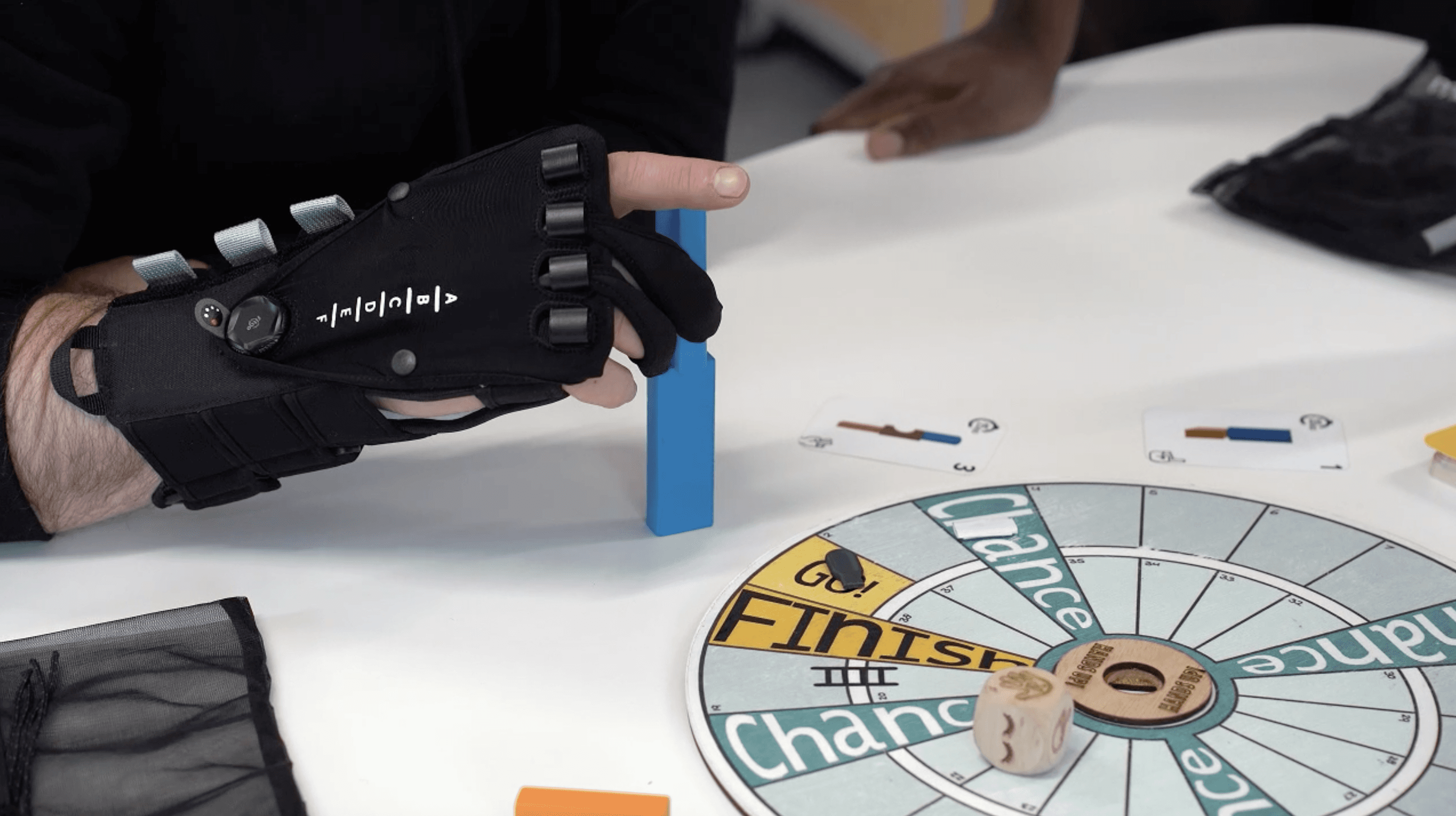
Madglove
From a physiotherapist's insight to a manufacturable assistive glove for people with hand spasticity

Ceriter
Engineering the next-generation gait sensor electronics for Ceriter's Stride One platform

Aseptic Technologies
Engineering a principle-first mixing-and-cooling system for cell-therapy manufacturing

Heau
One architecture, two products: engineering Heau’s instant-hot-water shower as both a retrofit and a built-in unit

Institute of Tropical Medicine
Designing a $2 blood self-sampling device for home use — from first prototype to peer-reviewed results, a patent, and a Red Dot Award

© 2026 Voxdale BV
© 2026 Voxdale BV
© 2026 Voxdale BV
Wonderful ideas, engineered from sketch to scale
Wonderful ideas, engineered from sketch to scale
Wonderful ideas, engineered from sketch to scale
Wonderful ideas, engineered from sketch to scale