June Energy
From analogue predecessor to a 3,000-device fleet — full-stack IoT development of June Energy's P1 dongle

Case Overview
Voxdale took June Energy's P1 smart-meter dongle from first prototype to a manufactured, deployed fleet of 3,000+ devices — developing the electronics, firmware, cloud, injection-moulded casing and connectivity — and continues to extend the product in the field.
Sector
Energy / IoT · Smart metering · Connected consumer hardware
Client
June Energy NV, an energy scale-up giving households real-time insight into their energy consumption
Product
The June P1 dongle — a plug-and-play smart-meter reader that connects to a household's digital energy meter via the P1 port and streams data to the June platform, without external power or complex setup
Voxdale's role
Full development, electrical and product: electronics, embedded firmware, cloud engineering, injection-moulded mechanical design and connectivity, plus production transfer and follow-up
Technologies
PCB and embedded firmware (NB-IoT), Bluetooth connectivity, thermal control, IP-rated injection-moulded casing, and an over-the-air (OTA) update system
How we worked
Full process from initial prototype and core-technology testing through supplier selection and production; a partnership running since 2019 and still active
Hardest challenge
Balancing four competing constraints at once: a low cost of goods, stable connectivity, effortless self-installation, and robustness in an outdoor, temperature-swinging environment
Outcome
A manufactured product with 3,000+ devices in use; a new water-metering feature deployed across the existing fleet by remote update, with no hardware change.
Case Overview
Voxdale took June Energy's P1 smart-meter dongle from first prototype to a manufactured, deployed fleet of 3,000+ devices — developing the electronics, firmware, cloud, injection-moulded casing and connectivity — and continues to extend the product in the field.
Sector
Energy / IoT · Smart metering · Connected consumer hardware
Client
June Energy NV, an energy scale-up giving households real-time insight into their energy consumption
Product
The June P1 dongle — a plug-and-play smart-meter reader that connects to a household's digital energy meter via the P1 port and streams data to the June platform, without external power or complex setup
Voxdale's role
Full development, electrical and product: electronics, embedded firmware, cloud engineering, injection-moulded mechanical design and connectivity, plus production transfer and follow-up
Technologies
PCB and embedded firmware (NB-IoT), Bluetooth connectivity, thermal control, IP-rated injection-moulded casing, and an over-the-air (OTA) update system
How we worked
Full process from initial prototype and core-technology testing through supplier selection and production; a partnership running since 2019 and still active
Hardest challenge
Balancing four competing constraints at once: a low cost of goods, stable connectivity, effortless self-installation, and robustness in an outdoor, temperature-swinging environment
Outcome
A manufactured product with 3,000+ devices in use; a new water-metering feature deployed across the existing fleet by remote update, with no hardware change.
Case Overview
Voxdale took June Energy's P1 smart-meter dongle from first prototype to a manufactured, deployed fleet of 3,000+ devices — developing the electronics, firmware, cloud, injection-moulded casing and connectivity — and continues to extend the product in the field.
Sector
Energy / IoT · Smart metering · Connected consumer hardware
Client
June Energy NV, an energy scale-up giving households real-time insight into their energy consumption
Product
The June P1 dongle — a plug-and-play smart-meter reader that connects to a household's digital energy meter via the P1 port and streams data to the June platform, without external power or complex setup
Voxdale's role
Full development, electrical and product: electronics, embedded firmware, cloud engineering, injection-moulded mechanical design and connectivity, plus production transfer and follow-up
Technologies
PCB and embedded firmware (NB-IoT), Bluetooth connectivity, thermal control, IP-rated injection-moulded casing, and an over-the-air (OTA) update system
How we worked
Full process from initial prototype and core-technology testing through supplier selection and production; a partnership running since 2019 and still active
Hardest challenge
Balancing four competing constraints at once: a low cost of goods, stable connectivity, effortless self-installation, and robustness in an outdoor, temperature-swinging environment
Outcome
A manufactured product with 3,000+ devices in use; a new water-metering feature deployed across the existing fleet by remote update, with no hardware change.
Executive Summary
June Energy gives households real-time insight into their energy use through a plug-and-play dongle that reads a digital meter's P1 port and streams the data to the June platform — no external power, no complex install.
June came to Voxdale with an analogue predecessor and needed a partner to turn the idea into a connected, manufacturable product.
Voxdale ran the full development, electrical and product: electronics, embedded firmware, cloud engineering, an injection-moulded casing, NB-IoT and Bluetooth connectivity, thermal control and IP-rated robustness — then carried it through component selection, supply-chain strategy, first production runs, quality control and production optimisation.
The hardest part was holding four requirements in tension at once: a low cost of goods, stable connectivity, effortless self-installation, and survival outdoors through temperature swings.
The product reached a fleet of 3,000+ devices, and years later Voxdale delivered an over-the-air firmware upgrade that added water-meter reading across the installed base without touching the hardware. The partnership, begun in 2019, is still active.
“Working with Voxdale allowed us to accelerate development without sacrificing quality.”
— Vincent De Dobbeleer, Co-founder, June Energy
Executive Summary
Executive Summary
Client Context
June Energy NV is an energy scale-up — a hardware-enabled software company — focused on giving households real-time insight into, and control over, their energy consumption.
Its product is a small plug-and-play dongle that connects to a digital energy meter through the standard P1 port and sends consumption data to the June platform, without external power or a complicated setup.
The value proposition rests on making the hardware effectively invisible: the user plugs it in, and the data flows.
When June approached Voxdale, an earlier analogue version of the product already existed, so the brief was not to invent the concept but to turn it into a robust, connected, manufacturable device — and then a fleet. The engagement began in 2019 and is ongoing.
Client Context
Client Context
The Technical Brief
Develop a plug-and-play P1 dongle that reads a household digital energy meter and streams data to the June platform
No external power and no complex setup — installable by the user themselves
Full electrical and product development: electronics, embedded firmware, cloud, and mechanical/injection-moulded casing
Reliable connectivity (NB-IoT; Bluetooth) with stable data delivery
Thermal control and IP-rated robustness for an outdoor-exposed environment
A low cost-of-goods target suited to mass consumer deployment
Carry the product from prototype through supplier selection, supply-chain strategy, production and quality control
The Technical Brief
The Technical Brief
The Harder, Less Obvious Part
The brief carried four constraints that pulled against each other and had to be solved together, not one at a time:
Four constraints pulling against each other. Low cost of goods, connectivity stability, user-friendly self-installation, and outdoor robustness are individually manageable but mutually antagonistic — cheaper components threaten connectivity and robustness; sealing for weather fights against easy installation and cost.
Robustness in an uncontrolled environment. The device lives outdoors, or in an unconditioned meter cupboard, enduring temperature swings that drive thermal-control and IP-rating requirements onto a low-cost bill of materials.
Self-installation by non-technical users. With no installer visit, the physical design and setup flow had to be simple enough for any household — a usability constraint that shapes the mechanical design and connectivity onboarding.
From prototype to a manufactured, scalable fleet. The design had to be transferable to production and reproducible at volume with stable quality, not just work as a single prototype.
The Harder, Less Obvious Part
The Harder, Less Obvious Part
What Voxdale Delivered
Voxdale ran the project end to end — electronics, firmware, cloud, mechanical design and production.
Electronics and PCB. Voxdale developed the electronics and printed-circuit board for the dongle, engineered to fit the connectivity, thermal-control and power constraints of a self-powered, meter-connected device.
Embedded firmware (NB-IoT). Voxdale developed the embedded firmware, including the NB-IoT connectivity stack that streams meter data to the June platform, plus the data parser that reads the digital meter's output. [TO CONFIRM: firmware stack, protocols, P1 telegram parsing details]
Connectivity — NB-IoT and Bluetooth. The device uses NB-IoT for data transport, alongside Bluetooth. Connectivity stability was one of the four headline constraints and a core focus of the engineering.
Cloud engineering. Voxdale contributed cloud engineering to receive, handle and support the device data and its deployment — later extended into cloud-based deployment scripts for fleet updates.
Mechanical design and injection-moulded casing. Voxdale designed the mechanical enclosure for injection moulding, engineered for IP-rated robustness and thermal behaviour in an outdoor environment, while keeping the form simple enough for user self-installation.
Thermal control. Thermal-control design to keep the electronics within operating range across the temperature swings of an outdoor or unconditioned location.
Component selection and cost engineering. Voxdale ran component selection against a low cost-of-goods target, balancing bill-of-materials cost against connectivity and robustness.
Production transfer, supply chain and quality control. Voxdale carried the product from prototype through supplier selection, supply-chain strategy, first production runs, quality control, production optimisation and production coordination.
User research and design iteration. Full development included user research, multiple design iterations and rapid prototyping ahead of production.
OTA water-metering upgrade. With 3,000+ devices already in the field, Voxdale extended the product to add water-meter reading without changing the hardware, in a phased programme: research and requirements to map the new functionality and refine firmware requirements; development and small-scale field testing of the updated firmware and an extended data parser; and large-scale deployment prep — a reliable over-the-air update process, cloud-based deployment scripts, edge-case rollout testing, and documentation for June's internal rollouts. Backwards compatibility with the existing fleet was a hard requirement throughout.
What Voxdale Delivered
What Voxdale Delivered
How We Worked
Voxdale ran the full process end to end, from initial prototype through to production coordination, in a relationship that has continued since 2019.
Project ownership — Anner Tiete, Team Blue
Intake and client relationship — Tim Dieryckx
Client contact — Vincent De Dobbeleer, Co-founder, June Energy
The defining feature is breadth held together over time: one partner covering electronics, firmware, cloud, mechanical design and production, staying on the product long enough to ship new features to a live fleet years after launch.
How We Worked
How We Worked
The Hardest Challenge, and How We Solved It
The challenge. Delivering a connected consumer device that was simultaneously cheap to build, reliably connected, easy for a non-technical user to install, and robust enough to survive outdoors through temperature swings.
Why it was difficult. These four requirements pull in opposite directions. Driving down bill-of-materials cost undermines connectivity margin and environmental robustness; sealing and ruggedising for the outdoors adds cost and can complicate installation; making installation effortless constrains the mechanical and connectivity design. No single component choice satisfies all four — the difficulty is the trade-off space itself, not any one specification.
What would not work. Optimising for any one axis in isolation — cheapest bill of materials, or best connectivity, or maximum ruggedness — would have broken one of the others. A lab-only prototype that ignored self-installation and outdoor life would not have survived a real fleet.
What we changed:
Treated the trade-off as the design. Cost, connectivity, usability and robustness were engineered together, with component selection and mechanical design decided against all four constraints at once rather than sequentially.
Engineered the environment in. Thermal control and IP-rated sealing were designed for an outdoor, unconditioned life from the start, on top of a low-cost bill of materials.
Designed for self-installation. The mechanical form and connectivity onboarding were kept simple enough for a household to install without a technician.
Built for production, not just function. Supplier selection, supply-chain strategy, quality control and production optimisation were part of the work from early on, so the design was reproducible at fleet scale.
What it proved. The balance held in the real world: the product reached 3,000+ devices in use, and years later a firmware-only OTA upgrade added water metering across that fleet without hardware changes — evidence the platform was engineered with enough headroom to evolve.
The Hardest Challenge, and How We Solved It
The Hardest Challenge, and How We Solved It
Outcome
A fully developed, manufactured P1 dongle: electronics, firmware, cloud, injection-moulded casing, NB-IoT and Bluetooth connectivity
3,000+ devices in use
A new water-meter-reading feature added to the existing fleet via OTA firmware update — no hardware change, fully backwards compatible
A remote update system, cloud deployment scripts and documentation handed to June for internal rollouts
Validated performance in both lab and real-world environments
A partnership active from 2019 to today
Outcome
Outcome
What This Proves for Similar Teams
This case is for energy and IoT scale-ups — especially hardware-enabled software companies — that need one partner to own an entire connected product: electronics, firmware, cloud, mechanical design and production.
It shows Voxdale can take a device from an analogue predecessor to a manufactured fleet under real cost and robustness constraints, and then keep improving it remotely once it is live in the field.
What This Proves for Similar Teams
What This Proves for Similar Teams
Need one partner to own your entire connected product?
Voxdale develops electronics, firmware, cloud, and mechanical design under one roof — from first prototype through to a manufactured fleet, and stays on to ship new features remotely once your product is live in the field. Explore our Consumer Electronics capabilities or contact us to discuss your connected product challenge.
Continue reading
Continue reading


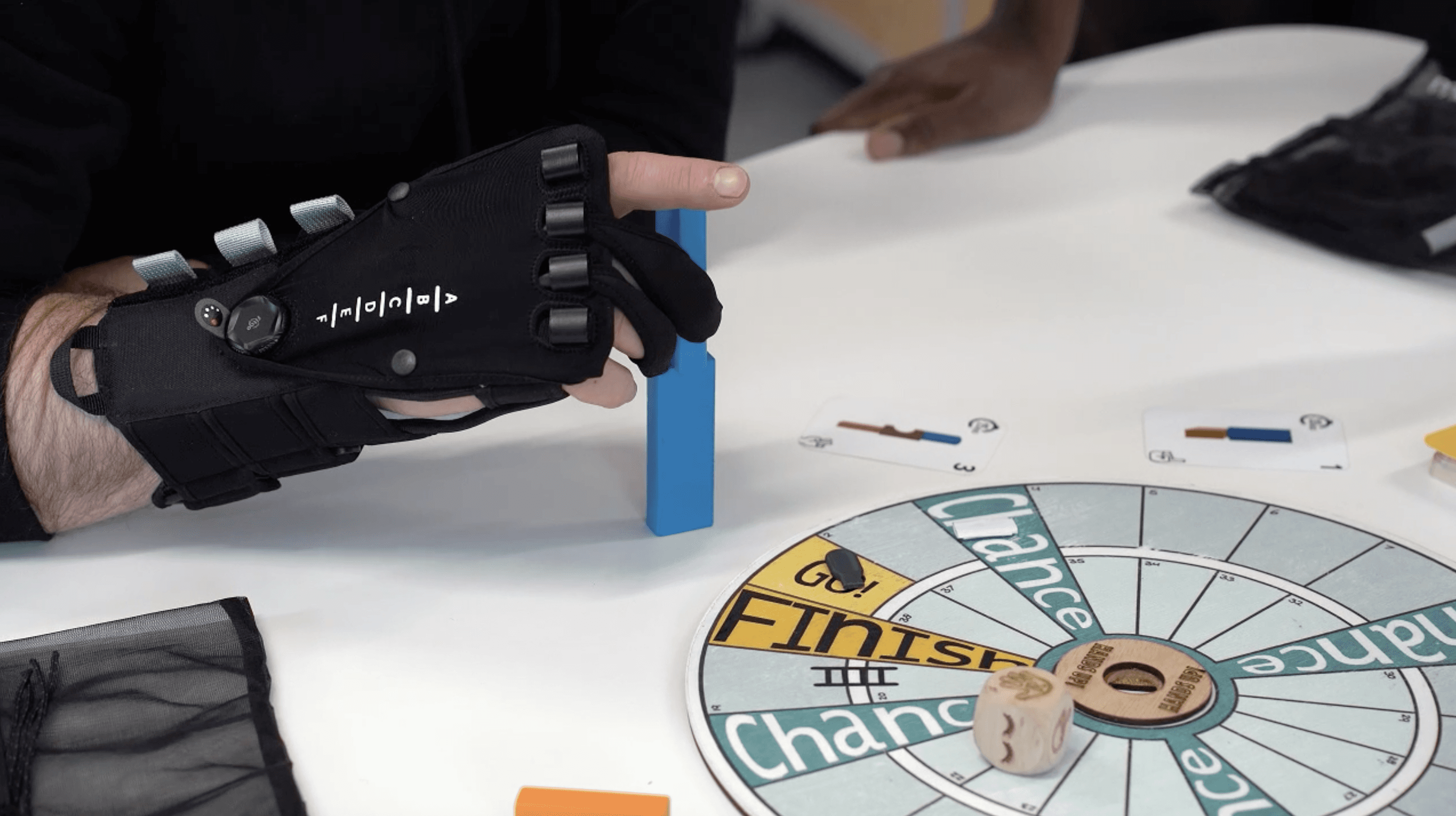
Madglove
From a physiotherapist's insight to a manufacturable assistive glove for people with hand spasticity

Ceriter
Engineering the next-generation gait sensor electronics for Ceriter's Stride One platform

Aseptic Technologies
Engineering a principle-first mixing-and-cooling system for cell-therapy manufacturing

Heau
One architecture, two products: engineering Heau’s instant-hot-water shower as both a retrofit and a built-in unit

Institute of Tropical Medicine
Designing a $2 blood self-sampling device for home use — from first prototype to peer-reviewed results, a patent, and a Red Dot Award

© 2026 Voxdale BV
© 2026 Voxdale BV
© 2026 Voxdale BV
Wonderful ideas, engineered from sketch to scale
Wonderful ideas, engineered from sketch to scale
Wonderful ideas, engineered from sketch to scale
Wonderful ideas, engineered from sketch to scale