Heau
One architecture, two products: engineering Heau’s instant-hot-water shower as both a retrofit and a built-in unit

Case Overview
Product
A smart thermostatic shower valve that stores hot water from the previous shower and delivers it instantly on the next, in two variants: retrofit and built-in.
Voxdale's role
Product design and development of a physical consumer product; core technologies and modular architecture.
Technologies
Modular skeleton architecture · sheet metal bending and 3D forming · EPP (Expanded Polypropylene) · extrusion · casting and machining · TSG design (Thermoplastic Foam Injection Moulding)
How we worked
Clear challenge framing, close client guidance, 3D-printed focus sessions, a physical installation mock-up, observational user research, and early supply-chain/industry-expert involvement.
Hardest challenge
A modular design that fits two extreme product variants under a hard cost and investment target, while protecting a sensitive vacuum tank, absorbing large building-industry tolerances, and a business model still in motion (B2C → B2B).
Outcome
A skeleton architecture serving both products with reused components and production technologies
2022: Company founded by civil engineers Philippe Bijnens and Alexander Gowie.
2024: The product won the international iF Design Award while still in its pre-launch phase.
July 2025: Opened their main headquarters and testing facility in Oudsbergen, Belgium.
February 2026: Officially hit the consumer market across Belgium, the Netherlands, France, and Germany through an exclusive retail partnership with X²O Badkamers.
Case Overview
Product
A smart thermostatic shower valve that stores hot water from the previous shower and delivers it instantly on the next, in two variants: retrofit and built-in.
Voxdale's role
Product design and development of a physical consumer product; core technologies and modular architecture.
Technologies
Modular skeleton architecture · sheet metal bending and 3D forming · EPP (Expanded Polypropylene) · extrusion · casting and machining · TSG design (Thermoplastic Foam Injection Moulding)
How we worked
Clear challenge framing, close client guidance, 3D-printed focus sessions, a physical installation mock-up, observational user research, and early supply-chain/industry-expert involvement.
Hardest challenge
A modular design that fits two extreme product variants under a hard cost and investment target, while protecting a sensitive vacuum tank, absorbing large building-industry tolerances, and a business model still in motion (B2C → B2B).
Outcome
A skeleton architecture serving both products with reused components and production technologies
2022: Company founded by civil engineers Philippe Bijnens and Alexander Gowie.
2024: The product won the international iF Design Award while still in its pre-launch phase.
July 2025: Opened their main headquarters and testing facility in Oudsbergen, Belgium.
February 2026: Officially hit the consumer market across Belgium, the Netherlands, France, and Germany through an exclusive retail partnership with X²O Badkamers.
Case Overview
Product
A smart thermostatic shower valve that stores hot water from the previous shower and delivers it instantly on the next, in two variants: retrofit and built-in.
Voxdale's role
Product design and development of a physical consumer product; core technologies and modular architecture.
Technologies
Modular skeleton architecture · sheet metal bending and 3D forming · EPP (Expanded Polypropylene) · extrusion · casting and machining · TSG design (Thermoplastic Foam Injection Moulding)
How we worked
Clear challenge framing, close client guidance, 3D-printed focus sessions, a physical installation mock-up, observational user research, and early supply-chain/industry-expert involvement.
Hardest challenge
A modular design that fits two extreme product variants under a hard cost and investment target, while protecting a sensitive vacuum tank, absorbing large building-industry tolerances, and a business model still in motion (B2C → B2B).
Outcome
A skeleton architecture serving both products with reused components and production technologies
2022: Company founded by civil engineers Philippe Bijnens and Alexander Gowie.
2024: The product won the international iF Design Award while still in its pre-launch phase.
July 2025: Opened their main headquarters and testing facility in Oudsbergen, Belgium.
February 2026: Officially hit the consumer market across Belgium, the Netherlands, France, and Germany through an exclusive retail partnership with X²O Badkamers.
Executive Summary
Heau’s smart thermostatic shower valve stores hot water from a previous shower and delivers it instantly on the next, but it had to exist as two very different products at once: a customer-facing retrofit valve for the bathroom and a built-in unit hidden behind the wall.
Voxdale was brought in to develop the physical product against strict cost and investment targets, while the business model itself (B2C versus B2B) and the supply chain behind it were still being explored in parallel.
The engineering answer was a shared skeleton architecture: one framework that fixed the installation procedure and component placement across both variants, so components, production technologies, and space solutions could be reused rather than duplicated. Voxdale validated the design hands-on through 3D-printed focus sessions, a real installation mock-up, observational user research, and early expert involvement, while solving hard sub-problems such as protecting a sensitive vacuum tank and absorbing the large tolerances of the building trade.
Executive Summary
Executive Summary
Client Context
Heau develops a smart thermostatic shower valve that stores the hot water left over from a previous shower and makes it available instantly the next time round, removing the usual wait and waste before hot water arrives. The product is offered in two variants: a retrofit unit and a built-in unit.
The product sits in the consumer and home space, specifically in sanitary ware, where it competes against, and installs alongside, established bathroom infrastructure.
When Heau needed to turn the concept into a manufacturable physical product, one that could hit an aggressive cost and investment target and install reliably in real bathrooms, the company brought in Voxdale for product design and development.
Client Context
Client Context
The Technical Brief
Develop a smart thermostatic shower valve that stores hot water from the previous session and delivers it instantly on the next.
Deliver the product in two variants from one design effort: a customer-facing retrofit unit and a built-in, Geberit-like unit.
Hit a strong cost target and stay within an investment budget.
Make the product compact enough for real constraints: dry-wall standard and shower space.
Protect a sensitive vacuum tank through assembly, transport, and installation.
Absorb the large dimensional tolerances typical of the building industry.
Optimise the design for cost, assembly, installation, and transport, including Europallet-friendly packaging.
The Technical Brief
The Technical Brief
The Harder, Less Obvious Part
Underneath that brief sat four problems that made this harder than a standard product-development effort.
Two extreme variants from one architecture. A retrofit unit on show in a bathroom and a hidden built-in unit are almost opposite products in form, finish, and installation. Yet both had to come from a single modular design to control costs and investment.
A moving business model. Development ran alongside a parallel exploratory track on the right business model and the supply chain that it implied. The physical product had to stay viable as that target moved.
A fragile core in a rough environment. A sensitive vacuum tank had to survive assembly, transport, and installation, and the whole product had to tolerate the large tolerances of building sites while still fitting within dry-wall and shower-space constraints.
Cost as a first-class constraint. Every architecture decision was bounded by a hard cost target and investment budget, not just technical function.
The Harder, Less Obvious Part
The Harder, Less Obvious Part
What Voxdale Delivered
Voxdale’s deliverable centred on one architectural decision that resolved every constraint at once, backed by a defined set of production technologies and design disciplines.
Modular skeleton architecture across two variants. The central deliverable: a skeleton architecture that supports both the retrofit and the built-in product in terms of installation procedure and component placement. This framework is what made two extreme variants buildable from a single design effort. It drove component reuse, cost control, reuse of production technologies, and a shared-space solution across both products.
Modular components shared across both products. Voxdale designed modular components engineered for use in both retrofit and built-in units, so a single set of parts and tooling could serve two product lines.
Production technologies. The product was engineered around a defined set of production technologies, developed and applied by Voxdale: TSG design technology, sheet metal technology (bending and 3D forming), EPP (expanded polypropylene) technology, extrusion technology, and casting and machining.
Vacuum-tank protection. Design measures to protect the sensitive vacuum tank, the component that enables the stored-hot-water function, throughout assembly, transport, and installation.
Design for cost, assembly, installation, and transport. The design was steered across four axes at once: cost-efficient system design, design for assembly, design for installation, and design for transport. The latter reduces cost and packaging by fitting on a Europallet.
Compact packaging into real building constraints. The product was made compact enough to occupy minimal space against dry-wall standards and shower-space limits, while absorbing the large tolerances of the building industry.
What Voxdale Delivered
What Voxdale Delivered
How We Worked
The engagement was a close, hands-on product-development track with Heau closely involved throughout.
Clear framing of the challenge up front, to support fast, high-quality decision-making
Close client interaction to steer the design toward product (cost, assembly, installation, transport)
Deep-dive focus sessions using 3D printing for quick validation
A physical installation mock-up to validate ease of installation
Observational user research
Early involvement of industry experts, including in the supply chain
A hands-on, try-and-fail approach using dummies in a real-life environment
This rhythm, tight front-end framing, cheap, fast real-world testing, and bringing in experts early rather than late, lets the team validate architectural decisions before they become expensive to change.
How We Worked
How We Worked
The Hardest Challenge, and How We Solved It
The challenge. Coming up with a single modular design that would fit two extreme product variants — a customer-facing retrofit unit and a built-in, Geberit-like unit, under a strong cost target and investment budget, while the business model itself was still moving.
Why was it difficult? The two variants pull in opposite directions on form, finish, and installation, yet they had to share a single investment.
On top of that sat a compact-space requirement (dry-wall standard and shower space), a sensitive vacuum tank to protect through assembly, transport, and installation, large building-industry tolerances to absorb, and a parallel, unresolved business-model track (B2C to B2B) that kept the commercial target dynamic.
What would not work. Designing the two variants separately, or freezing the design around one business model, would have blown the cost and investment target and produced a product that could not adapt as the B2C/B2B question was resolved.
What we changed:
Build one skeleton, not two products. A skeleton architecture was designed to support both variants in the installation procedure and component placement, making two products one engineering effort.
Push reuse everywhere. The architecture was used to maximise reuse of components, reuse of production technologies, cost control, and shared space solutions across both variants.
Validate in the real world, early and cheaply. A hands-on try-and-fail approach used dummies in a real-life environment, 3D-printed focus sessions for quick validation, an installation mock-up, and observational user research.
Bring experts in early. Industry experts, including those in the supply chain, were involved early, so manufacturability and sourcing shaped the design rather than constraining it later.
The Hardest Challenge, and How We Solved It
The Hardest Challenge, and How We Solved It
Outcome
A modular skeleton architecture serving both the retrofit and built-in variants from one design effort
Component and production-technology reuse across both products, supporting cost control
A compact product engineered to fit dry-wall and shower-space constraints and absorb building-industry tolerances
A design optimised for cost, assembly, installation, and transport, including Europallet packaging
Outcome
Outcome
What This Proves for Similar Teams
This case is for consumer- and home-hardware companies that need a single engineering investment to cover multiple product variants under a hard cost target, often while the go-to-market strategy is still being decided.
It shows how Voxdale designs for manufacturability, installation and transport from the start while using low-cost real-world validation such as 3D prints, mock-ups and dummies to de-risk decisions quickly.
And it shows that a design can hold together even when the business model underneath it is still moving.
What This Proves for Similar Teams
What This Proves for Similar Teams
Discuss your consumer-hardware challenge with Voxdale
Voxdale designs modular architectures that let different products share components, tooling, and production technologies, while holding to a hard cost target even as your business model continues to evolve. Explore our Consumer Electronics capabilities or contact us to discuss your product architecture challenge.
Continue reading
Continue reading


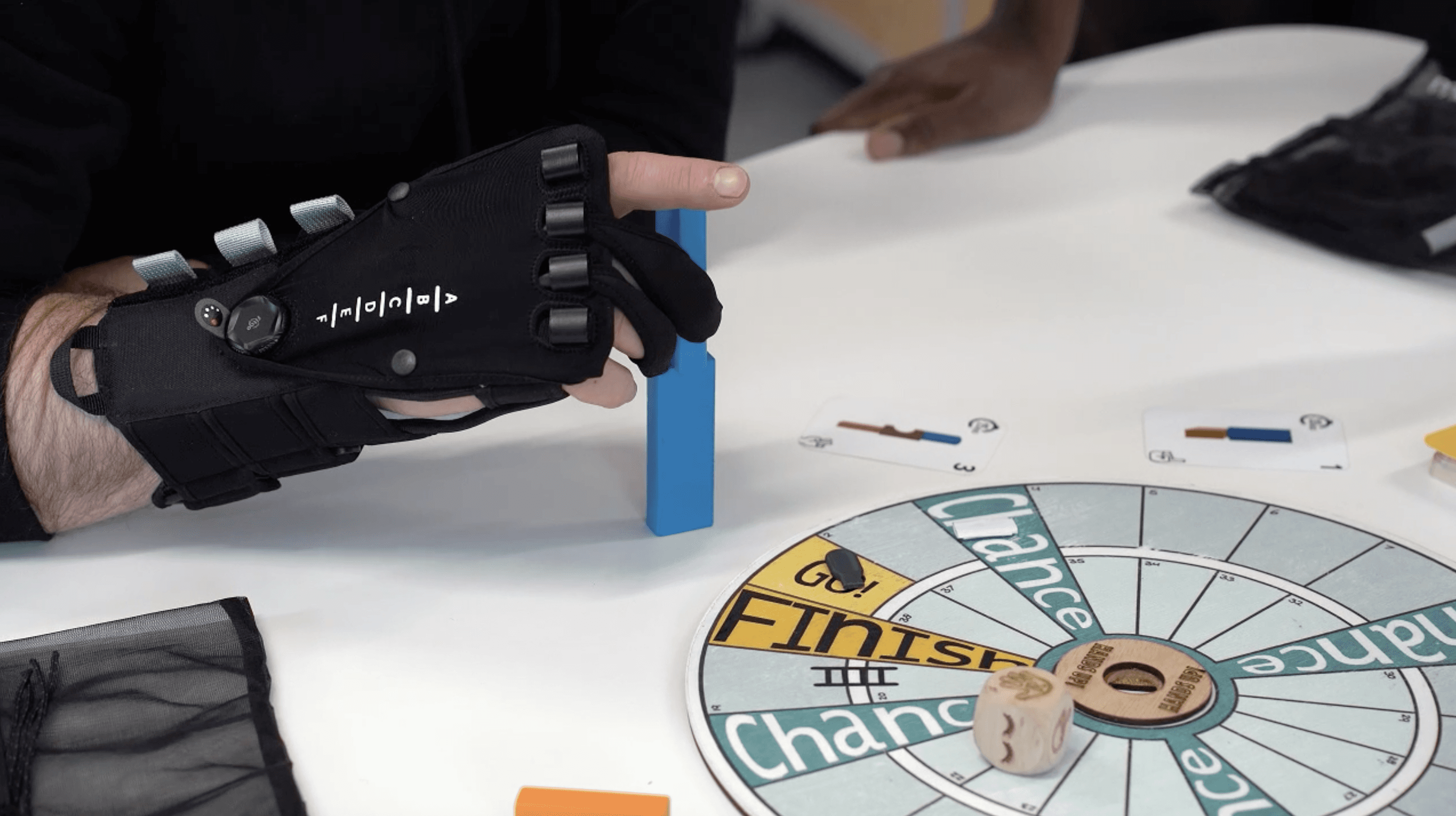
Madglove
From a physiotherapist's insight to a manufacturable assistive glove for people with hand spasticity

Ceriter
Engineering the next-generation gait sensor electronics for Ceriter's Stride One platform

Aseptic Technologies
Engineering a principle-first mixing-and-cooling system for cell-therapy manufacturing
Heau
One architecture, two products: engineering Heau’s instant-hot-water shower as both a retrofit and a built-in unit

Institute of Tropical Medicine
Designing a $2 blood self-sampling device for home use — from first prototype to peer-reviewed results, a patent, and a Red Dot Award

© 2026 Voxdale BV
© 2026 Voxdale BV
© 2026 Voxdale BV
Wonderful ideas, engineered from sketch to scale
Wonderful ideas, engineered from sketch to scale
Wonderful ideas, engineered from sketch to scale
Wonderful ideas, engineered from sketch to scale