UZE Energy
Fast EV Charging That Comes to the Car: A Mobile Charge Box from Research to Deployed Fleet

Case Overview
Voxdale engineered UZE Energy's mobile fast-charging box, battery, power electronics, cooling and mechanical design, from technology research through a field-tested prototype to a deployed fleet.
Sector
Energy / EV charging / e-mobility
Client
UZE Energy BV
Product
A mobile, fast EV charger that mounts on a bike-like mobility platform, a trailer, or another carrier, and charges a city electric car from 20 to 80% in about 30 minutes
Voxdale's role
Full product development: battery technology selection, power electronics, cooling, waterproofing, mechanical/sheet-metal design, electronics and PCB, CCS charging, app and cloud
Technologies
LTO (lithium titanate oxide) battery, low-loss semiconductor power electronics, a renewed cooling concept, and mechanical/mobility design, combined into a ~30 kWh, 50 kW mobile charging unit taken from breadboard to an optimised fleet
How we worked
Phased: technology research to breadboard component testing to field-tested mobile prototype to optimised fleet roll-out
Hardest challenge
Selecting a battery chemistry that survives fast charging, long life and high power at once (LTO), then packaging it into a compact, lightweight, performant mobile unit
Outcome
Concept confirmed in the field and a fleet of optimised, more robust units rolled out.
Case Overview
Voxdale engineered UZE Energy's mobile fast-charging box, battery, power electronics, cooling and mechanical design, from technology research through a field-tested prototype to a deployed fleet.
Sector
Energy / EV charging / e-mobility
Client
UZE Energy BV
Product
A mobile, fast EV charger that mounts on a bike-like mobility platform, a trailer, or another carrier, and charges a city electric car from 20 to 80% in about 30 minutes
Voxdale's role
Full product development: battery technology selection, power electronics, cooling, waterproofing, mechanical/sheet-metal design, electronics and PCB, CCS charging, app and cloud
Technologies
LTO (lithium titanate oxide) battery, low-loss semiconductor power electronics, a renewed cooling concept, and mechanical/mobility design, combined into a ~30 kWh, 50 kW mobile charging unit taken from breadboard to an optimised fleet
How we worked
Phased: technology research to breadboard component testing to field-tested mobile prototype to optimised fleet roll-out
Hardest challenge
Selecting a battery chemistry that survives fast charging, long life and high power at once (LTO), then packaging it into a compact, lightweight, performant mobile unit
Outcome
Concept confirmed in the field and a fleet of optimised, more robust units rolled out.
Case Overview
Voxdale engineered UZE Energy's mobile fast-charging box, battery, power electronics, cooling and mechanical design, from technology research through a field-tested prototype to a deployed fleet.
Sector
Energy / EV charging / e-mobility
Client
UZE Energy BV
Product
A mobile, fast EV charger that mounts on a bike-like mobility platform, a trailer, or another carrier, and charges a city electric car from 20 to 80% in about 30 minutes
Voxdale's role
Full product development: battery technology selection, power electronics, cooling, waterproofing, mechanical/sheet-metal design, electronics and PCB, CCS charging, app and cloud
Technologies
LTO (lithium titanate oxide) battery, low-loss semiconductor power electronics, a renewed cooling concept, and mechanical/mobility design, combined into a ~30 kWh, 50 kW mobile charging unit taken from breadboard to an optimised fleet
How we worked
Phased: technology research to breadboard component testing to field-tested mobile prototype to optimised fleet roll-out
Hardest challenge
Selecting a battery chemistry that survives fast charging, long life and high power at once (LTO), then packaging it into a compact, lightweight, performant mobile unit
Outcome
Concept confirmed in the field and a fleet of optimised, more robust units rolled out.
Executive Summary
UZE Energy set out to make fast EV charging mobile: a charger that comes to the car, rather than the car queuing at a fixed post.
The product is a mobile fast charger that mounts on a bike-like mobility platform, a trailer, or another carrier, and charges a city electric car from 20 to 80% in about 30 minutes.
The physics behind that promise is unforgiving. Fast charging, long battery life and high power pull against each other, and a mobile unit cannot carry the bulk of a fixed charger while still delivering serious power. Voxdale was brought in to resolve both problems together, starting with a research phase to select the right battery, power-inversion, cooling and mobility technologies.
Voxdale owned the full development path: battery chemistry selection, power electronics, cooling, waterproofing, mechanical and sheet-metal design, electronics and PCB, CCS charging, and the app and cloud layer. The hardest calls were choosing LTO (lithium titanate oxide) as the battery chemistry, and packaging high power into a compact, lightweight unit using low-loss semiconductors and a renewed cooling concept.
A breadboard proved the individual components, a ~30 kWh / 50 kW field prototype proved the concept in real use, and the design was then optimised into a fleet of more robust units.
Executive Summary
Executive Summary
Client Context
UZE Energy BV works in energy and EV charging. Its product answers a specific problem in city e-mobility: charging that is not tied to fixed infrastructure.
Rather than routing every electric car to a permanent charging post, UZE's mobile fast charger is brought to the vehicle, mounted on a bike-like mobility platform, a trailer, or another carrier.
The charger delivers a 20-80% charge to a city EV in roughly 30 minutes, which meant the underlying engineering had to support high charge and discharge power from day one, not as a later upgrade.
When the concept needed to become a real, deployable, robust product, UZE worked with Voxdale to develop it from the underlying technology choices through to a fleet in the field.
Client Context
Client Context
The Technical Brief
Develop a mobile fast charger that charges a city EV from 20 to 80% in about 30 minutes
Make it mountable on a bike-like mobility platform, a trailer, or another carrier
Select battery, power-inversion, cooling and mobility technologies fit for the duty cycle
Deliver high charge and discharge power (target unit ~30 kWh capacity, 50 kW charge/discharge) from a compact, lightweight package
Make it robust, shockproof and waterproof for real-world mobile use
Support CCS charging and EV communication, plus app and cloud connectivity
Prove the concept in the field, then optimise for a fleet roll-out
The Technical Brief
The Technical Brief
The Harder, Less Obvious Part
The brief carried a set of constraints that pulled against each other and could not be solved one at a time:
A battery duty cycle that fights itself. The application demands fast charging, long lifetime and high power at once, requirements that normally trade off against each other. The chemistry had to be chosen deliberately, not defaulted; LTO was selected after evaluation.
Mobile means compact, light and still performant. A mobile unit cannot carry the mass or volume of a fixed charger, yet still had to deliver high power. This forced low-loss semiconductor power electronics and a renewed cooling concept.
Real-world robustness. As a mobile device it had to be shockproof and waterproof, and survive being moved and mounted on different carriers, while housing high-current, high-voltage electronics.
From a single prototype to a repeatable fleet. The design had to move from a one-off field prototype to multiple optimised, more robust units built and deployed together.
The Harder, Less Obvious Part
The Harder, Less Obvious Part
What Voxdale Delivered
Voxdale opened with a research phase to determine the best technologies for the application across four fronts, battery, power inversion, cooling and mobility, and the rest of the development flowed from these choices.
Battery technology, LTO selection. After evaluating options against a demanding brief (fast charging, long lifetime, high power), Voxdale selected LTO, lithium titanate oxide, as the best-fit chemistry for the use case. This underpins the whole product's charge/discharge behaviour and longevity.
Power electronics. Development of the power-electronics system: power inverters, and high-current, high-voltage contactors. To hit high power in a compact, lightweight unit, Voxdale used low-loss semiconductor technology.
Cooling design. A renewed cooling concept was developed specifically to allow the compact, lightweight, high-power packaging, one of the two enabling technologies behind the mobile form factor.
Wiring and busbar design. Design of the wiring and busbars to carry the high currents involved in fast charge and discharge safely within the enclosure.
CCS charging and EV communication. Implementation of the CCS charging protocol, including the electric-car charging and communication needed to deliver the 20-80% in ~30 minutes charge to a city EV.
Waterproofing and shockproof design. The unit was designed to be waterproof and shockproof for mobile, outdoor, real-world use.
Mechanical, sheet-metal and lightweight design. Mechanical design of the device including sheet-metal design, driven throughout by lightweight-design goals to keep the mobile unit compact and portable.
Electronics and PCB design. In-house electronics design and PCB design for the control and power boards.
Mobility concepts. Development of the mobility concept: how the charger mounts and moves on a bike-like mobility platform, trailer or other carrier.
App development and cloud setup. Development of an app and a cloud setup for the product.
Usability studies and user testing. Usability studies and user testing were carried out, with field-deployed mobile devices used to evaluate usability in real conditions.
Prototype and fleet build. Voxdale built a breadboard model to test individual components, then a mobile device of around 30 kWh capacity with 50 kW charge/discharge performance to confirm the concept in the field, then a set of optimised, more robust units rolled out as a fleet.
What Voxdale Delivered
What Voxdale Delivered
How We Worked
The project ran as a phased development, moving from technology research to a field-proven fleet, with a small team owning the work end to end.
Project lead, Merijn, overall direction and main point of contact for UZE
Battery and power electronics engineering: chemistry selection, power inverter design and cooling concept
Mechanical and mobility engineering: sheet-metal design, waterproofing, and the mobility/mounting concept
Electronics, software and cloud: PCB design, CCS charging implementation, app and cloud setup
The working rhythm was a de-risking sequence: a research phase first, to choose battery, power-inversion, cooling and mobility technologies; then a breadboard model to test individual components; then a field prototype to confirm the concept in real use and evaluate usability; then a fleet of optimised, more robust units. Each phase de-risked the next, so the concept was proven in the field before it was scaled, rather than committing to volume on paper.
How We Worked
How We Worked
The Hardest Challenge, and How We Solved It
The challenge. Selecting a battery chemistry for a duty cycle that demands fast charging, long life and high power simultaneously, and packaging that into a compact, lightweight yet performant mobile unit.
Why it was difficult. Fast charging, long lifetime and high power normally pull against one another, so the chemistry choice was not obvious and had real consequences for life and performance. At the same time, a mobile unit cannot carry the bulk of a fixed charger, so delivering high power from a small, light package pushed hard on the power electronics and cooling.
What would not work. A conventional battery chemistry optimised for energy density, or standard power electronics and cooling sized as if the unit were stationary, would have failed either the duty cycle or the compact-and-light mobility requirement.
What we changed:
Select LTO after evaluation. Lithium titanate oxide was chosen as the best fit for fast charge, long life and high power together.
Use low-loss semiconductor technology. Low-loss semiconductors kept losses and heat down so high power could fit in a compact, lightweight unit.
Renew the cooling concept. A new cooling concept was developed to make the compact, high-power packaging thermally viable.
The Hardest Challenge, and How We Solved It
The Hardest Challenge, and How We Solved It
Outcome
A working mobile fast charger: 20-80% charge of a city EV in about 30 minutes
Field-confirmed concept via a ~30 kWh, 50 kW mobile prototype
An optimised, more robust fleet rolled out
LTO battery, low-loss power electronics and a renewed cooling concept delivering high power from a compact, lightweight package
App and cloud setup in place
Outcome
Outcome
What This Proves for Similar Teams
This case is for energy and e-mobility ventures whose concept lives or dies on hard physics, battery chemistry, power electronics, thermal and weight, not just industrial design.
It shows Voxdale can own the full stack, from choosing the right technologies through breadboard and field prototype to a deployed, optimised fleet, and can resolve conflicting requirements (fast charging, long life and high power; compact yet powerful) with concrete engineering decisions rather than compromise.
What This Proves for Similar Teams
What This Proves for Similar Teams
Does your concept live or die on hard physics — battery chemistry, power electronics, thermal, and weight?
Voxdale owns the full stack, from choosing the right technologies through breadboard and field prototype to a deployed, optimised fleet, resolving conflicting requirements with concrete engineering decisions rather than compromise. Explore our Energy & Clean Tech capabilities or contact us to discuss your project.
Continue reading
Continue reading


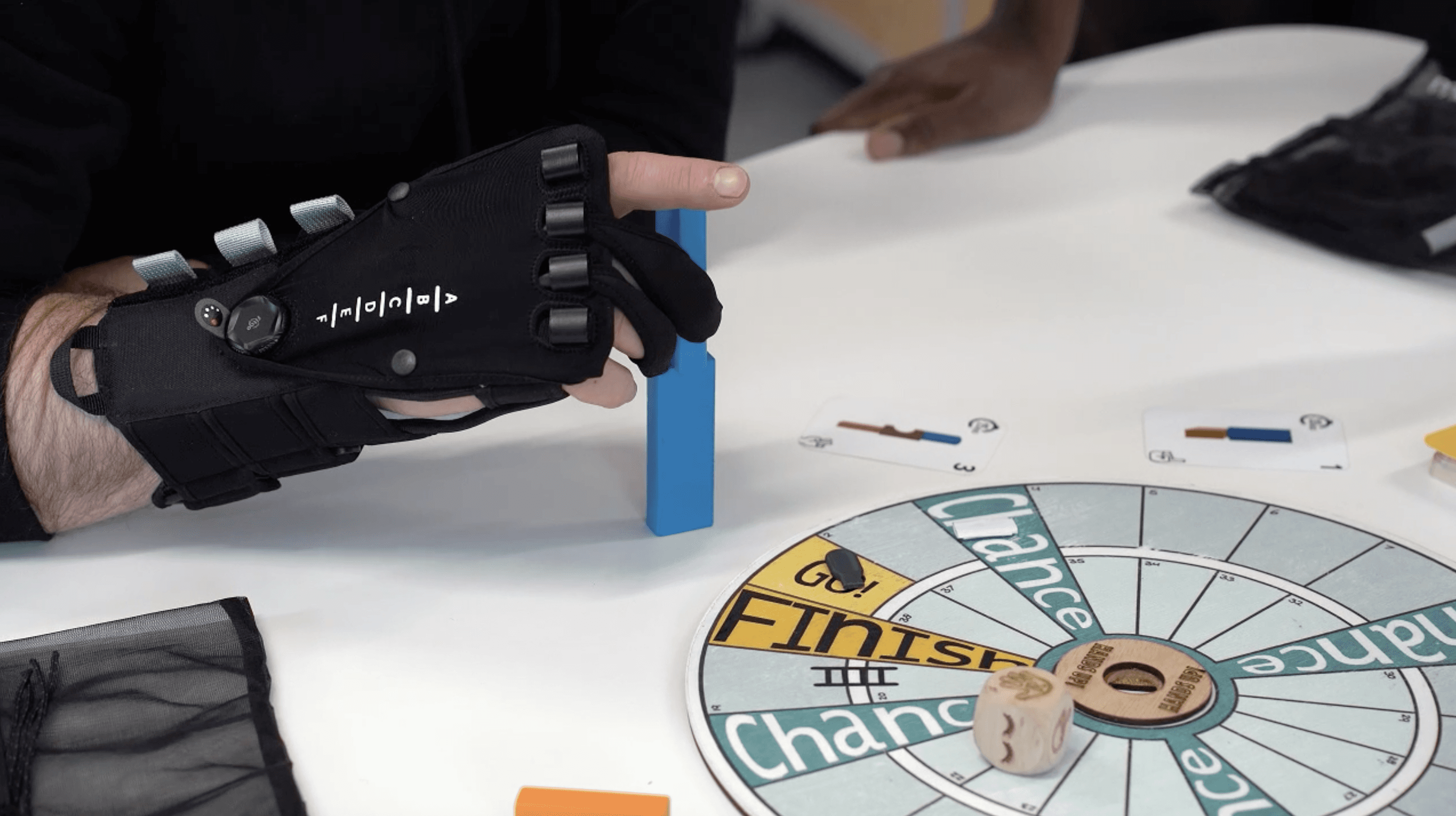
Madglove
From a physiotherapist's insight to a manufacturable assistive glove for people with hand spasticity

Ceriter
Engineering the next-generation gait sensor electronics for Ceriter's Stride One platform

Aseptic Technologies
Engineering a principle-first mixing-and-cooling system for cell-therapy manufacturing

Heau
One architecture, two products: engineering Heau’s instant-hot-water shower as both a retrofit and a built-in unit

Institute of Tropical Medicine
Designing a $2 blood self-sampling device for home use — from first prototype to peer-reviewed results, a patent, and a Red Dot Award

© 2026 Voxdale BV
© 2026 Voxdale BV
© 2026 Voxdale BV
Wonderful ideas, engineered from sketch to scale
Wonderful ideas, engineered from sketch to scale
Wonderful ideas, engineered from sketch to scale
Wonderful ideas, engineered from sketch to scale