Voxdale x University of Ghent
Proving the simulation is right: a novel CFD validation method for microfluidic mixer devices

Case Overview
Voxdale, with the University of Ghent, developed a novel method for validating Computational Fluid Dynamics (CFD) outcomes on microfluidic mixer devices — turning simulation from a design assumption into an evidence-backed result.
Sector
Medical Devices · Microfluidics · Simulation / CFD
Client
Research collaboration
Product
CFD for microfluidic mixer devices — simulation plus a validation methodology
Voxdale's role
CFD simulation of the mixer device and development of a novel experimental validation method; academic co-authorship with the University of Ghent
Technologies
Computational Fluid Dynamics modelling of microfluidic mixing
How we worked
A joint study — four Voxdale engineers and one University of Ghent researcher
Hardest challenge
Proving that CFD-predicted mixing performance holds true at microscale, where flow is laminar and diffusion-dominated and direct internal measurement is extremely difficult
Outcome
A documented, novel method for validating CFD outcomes on microfluidic mixer devices
Case Overview
Voxdale, with the University of Ghent, developed a novel method for validating Computational Fluid Dynamics (CFD) outcomes on microfluidic mixer devices — turning simulation from a design assumption into an evidence-backed result.
Sector
Medical Devices · Microfluidics · Simulation / CFD
Client
Research collaboration
Product
CFD for microfluidic mixer devices — simulation plus a validation methodology
Voxdale's role
CFD simulation of the mixer device and development of a novel experimental validation method; academic co-authorship with the University of Ghent
Technologies
Computational Fluid Dynamics modelling of microfluidic mixing
How we worked
A joint study — four Voxdale engineers and one University of Ghent researcher
Hardest challenge
Proving that CFD-predicted mixing performance holds true at microscale, where flow is laminar and diffusion-dominated and direct internal measurement is extremely difficult
Outcome
A documented, novel method for validating CFD outcomes on microfluidic mixer devices
Case Overview
Voxdale, with the University of Ghent, developed a novel method for validating Computational Fluid Dynamics (CFD) outcomes on microfluidic mixer devices — turning simulation from a design assumption into an evidence-backed result.
Sector
Medical Devices · Microfluidics · Simulation / CFD
Client
Research collaboration
Product
CFD for microfluidic mixer devices — simulation plus a validation methodology
Voxdale's role
CFD simulation of the mixer device and development of a novel experimental validation method; academic co-authorship with the University of Ghent
Technologies
Computational Fluid Dynamics modelling of microfluidic mixing
How we worked
A joint study — four Voxdale engineers and one University of Ghent researcher
Hardest challenge
Proving that CFD-predicted mixing performance holds true at microscale, where flow is laminar and diffusion-dominated and direct internal measurement is extremely difficult
Outcome
A documented, novel method for validating CFD outcomes on microfluidic mixer devices
Executive Summary
Microfluidic mixer devices sit at the heart of a growing class of medical and pharmaceutical products — from drug formulation to diagnostics to nanoparticle-based therapeutics — and CFD is the standard tool engineering teams use to design them.
But CFD is only as good as its validation. At microscale, where flow is laminar and mixing is governed by diffusion rather than turbulence, small modelling choices can materially change the predicted outcome — and there is rarely a clean, direct way to measure what is really happening inside a sealed micro-channel to check the simulation against. Many teams end up trusting the model without a rigorous way to prove it matches reality.
Voxdale, working with the University of Ghent, set out to close that gap. Voxdale built the CFD model of the mixer and, together with the university, developed a novel method for validating the simulation's mixing predictions against physical measurement.
The result is documented in a co-authored study and lets Voxdale offer CFD for microfluidics as an evidence-backed capability rather than an assumption.
Executive Summary
Executive Summary
Client Context
This case study is classified as a research engagement in the medical-devices sector.
It was produced by four Voxdale engineers — Daniel Blanco, Patrick Vlieger, Koen Beyers and Tim Dieryckx — together with Thijs Meewis of the University of Ghent.
Microfluidic mixers are used wherever two or more fluids must be combined precisely and reproducibly at very small scale — for example in drug formulation, diagnostics, and the production of nanoparticle-based therapeutics.
Client Context
Client Context
The Technical Brief
Simulate the fluid behaviour and mixing performance inside a microfluidic mixer device using CFD.
Establish whether the CFD outcomes can be trusted — i.e. develop a way to validate them experimentally.
Do so at microscale, where direct internal measurement is difficult.
Produce a method general enough to apply to microfluidic mixer devices, not just a single geometry.
The Technical Brief
The Technical Brief
The Harder, Less Obvious Part
The brief carried a set of constraints that reinforced each other rather than resolving in sequence:
Validation, not just simulation. Running a CFD model is routine; proving that its predicted mixing matches physical reality is not, since there is rarely a clean, direct measurement to compare against inside a micro-channel.
Microscale physics. At the low Reynolds numbers of microfluidic flow, mixing is dominated by diffusion rather than turbulence, so small modelling choices can materially change the predicted outcome.
Measurement access. The inside of a micro-channel cannot easily be instrumented without disturbing the very flow being measured — which is why a novel validation approach was needed.
Generalisability. A one-off comparison proves little; the value lies in a repeatable method that can be applied to other mixer geometries.
The Harder, Less Obvious Part
The Harder, Less Obvious Part
What Voxdale Delivered
The engagement combined a CFD model of the mixer with a purpose-built method for proving that model correct.
CFD simulation of a microfluidic mixer device. Voxdale built the Computational Fluid Dynamics model(s) of the mixer, predicting the internal flow field and mixing performance.
A novel CFD validation method. The core contribution of the study: a new method for validating the CFD outcomes on microfluidic mixer devices — the headline deliverable and the reason the study exists.
Experimental setup / test hardware. A physical means of measuring real mixing performance in the device, to compare against the CFD prediction.
Comparison and quantification. Voxdale quantified how well the CFD matched the physical measurement, establishing the confidence with which the simulation can be used for design.
Documented, co-authored study. The work is written up as a case study co-authored with the University of Ghent, giving the method academic weight and making it citable.
What Voxdale Delivered
What Voxdale Delivered
How We Worked
The study paired Voxdale's CFD and engineering capability with the University of Ghent's research resources:
Daniel Blanco (Voxdale)
Patrick Vlieger (Voxdale)
Koen Beyers (Voxdale)
Tim Dieryckx (Voxdale)
Thijs Meewis (University of Ghent)
What made it effective was pairing industrial CFD practice with academic experimental rigour, so the simulation was held to a genuine validation standard rather than an internal sanity check.
How We Worked
How We Worked
The Hardest Challenge, and How We Solved It
The challenge. Proving that CFD predictions of mixing inside a microfluidic device are correct, when the microscale makes direct internal measurement extremely difficult.
Why it was difficult. At microfluidic scale, flow is laminar and mixing depends on diffusion, so the simulated result is sensitive to modelling choices — yet the smallness of the device makes it hard to measure what is really happening inside, leaving no obvious ground truth to check against.
What would not work. Simply trusting the CFD output, or comparing it against a coarse outlet measurement, would not prove the internal mixing behaviour the design depends on.
What we changed:
Dedicated validation method. Developed a dedicated validation method rather than relying on qualitative agreement between simulation and intuition.
Academic partnership. Brought in the University of Ghent to hold the comparison to a research standard rather than an internal check.
Quantified agreement. Quantified the agreement between CFD and physical measurement so the simulation's trustworthiness could be stated, not assumed.
The Hardest Challenge, and How We Solved It
The Hardest Challenge, and How We Solved It
Prototypes, Tests, Evidence
A CFD model of the microfluidic mixer device.
A physical experimental validation setup used to measure real mixing performance.
A co-authored case study with the University of Ghent documenting the validation method
Prototypes, Tests, Evidence
Prototypes, Tests, Evidence
Outcome
A novel, documented method for validating CFD outcomes on microfluidic mixer devices.
CFD for microfluidics positioned as an evidence-backed Voxdale capability.
An academic collaboration established with the University of Ghent.
Outcome
Outcome
Ready to bring evidence-backed engineering to your medical device or life-sciences programme?
Voxdale pairs rigorous engineering with academic-grade validation so quality-critical parameters in your device or process can be trusted, not assumed. Explore our Life Sciences & Medical development capabilities or contact us to discuss your life sciences challenge.
Continue reading
Continue reading

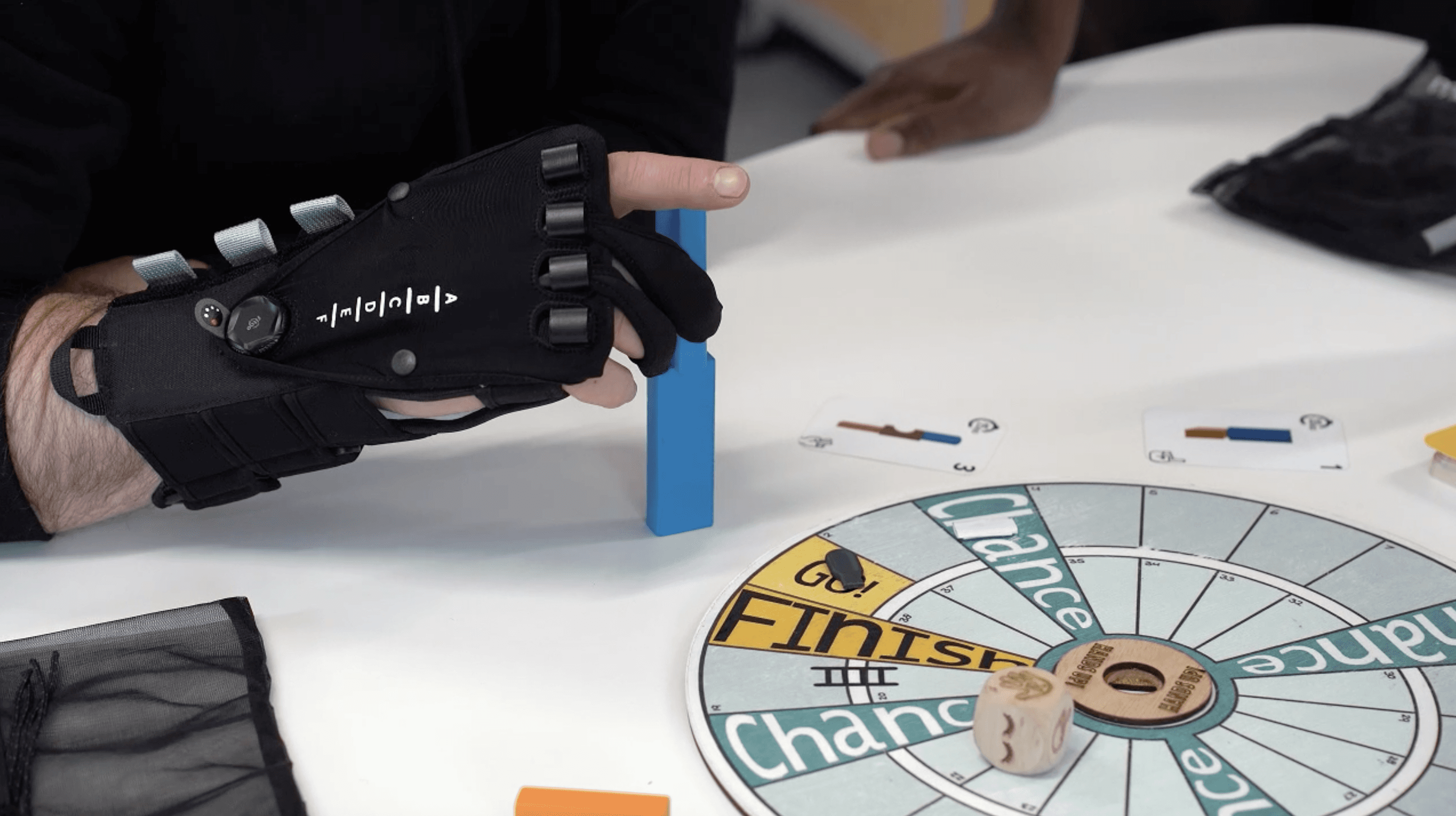
Madglove
From a physiotherapist's insight to a manufacturable assistive glove for people with hand spasticity

Ceriter
Engineering the next-generation gait sensor electronics for Ceriter's Stride One platform

Aseptic Technologies
Engineering a principle-first mixing-and-cooling system for cell-therapy manufacturing

Heau
One architecture, two products: engineering Heau’s instant-hot-water shower as both a retrofit and a built-in unit

Institute of Tropical Medicine
Designing a $2 blood self-sampling device for home use — from first prototype to peer-reviewed results, a patent, and a Red Dot Award

© 2026 Voxdale BV
© 2026 Voxdale BV
© 2026 Voxdale BV
Wonderful ideas, engineered from sketch to scale
Wonderful ideas, engineered from sketch to scale
Wonderful ideas, engineered from sketch to scale
Wonderful ideas, engineered from sketch to scale