Food & AgriTech
Physical products for food and drink environments, from dispensing systems and processing lines to smart farming equipment

Who We Work With
Voxdale supports food processing equipment builders, agricultural machinery OEMs, agri-robotics ventures, controlled-environment and vertical farming companies, and food producers developing their own production equipment. Projects range from hygienic handling and grading modules and soft-gripping end effectors to autonomous field platforms, tractor implements, and full machine redesigns targeting CE marking, EHEDG-compliant hygienic design, and series production.
Voxdale supports food processing equipment builders, agricultural machinery OEMs, agri-robotics ventures, controlled-environment and vertical farming companies, and food producers developing their own production equipment. Projects range from hygienic handling and grading modules and soft-gripping end effectors to autonomous field platforms, tractor implements, and full machine redesigns targeting CE marking, EHEDG-compliant hygienic design, and series production.
Typical challenges in Food & AgriTech
Typical challenges in Food & AgriTech
Typical challenges in Food & AgriTech
01
Hygienic Design and Food Contact Compliance
Engineering for verifiable hygiene, where cleanable geometry, weld quality, surface finish, seals, and traceable food-contact materials determine compliance and contamination risk.
01
Hygienic Design and Food Contact Compliance
Engineering for verifiable hygiene, where cleanable geometry, weld quality, surface finish, seals, and traceable food-contact materials determine compliance and contamination risk.
01
Hygienic Design and Food Contact Compliance
Engineering for verifiable hygiene, where cleanable geometry, weld quality, surface finish, seals, and traceable food-contact materials determine compliance and contamination risk.
01
Hygienic Design and Food Contact Compliance
Engineering for verifiable hygiene, where cleanable geometry, weld quality, surface finish, seals, and traceable food-contact materials determine compliance and contamination risk.
02
Harsh, Variable, and Biologically Inconsistent Operating Conditions
Designing for aggressive washdown, harsh field conditions, and full-season temperature swings, while handling highly variable products across size, ripeness, firmness, and moisture.
02
Harsh, Variable, and Biologically Inconsistent Operating Conditions
Designing for aggressive washdown, harsh field conditions, and full-season temperature swings, while handling highly variable products across size, ripeness, firmness, and moisture.
02
Harsh, Variable, and Biologically Inconsistent Operating Conditions
Designing for aggressive washdown, harsh field conditions, and full-season temperature swings, while handling highly variable products across size, ripeness, firmness, and moisture.
02
Harsh, Variable, and Biologically Inconsistent Operating Conditions
Designing for aggressive washdown, harsh field conditions, and full-season temperature swings, while handling highly variable products across size, ripeness, firmness, and moisture.
03
Season-Bound Validation and Thin Unit Economics
Working within narrow validation windows, where a missed trial can cost a year of development and peak-season testing is commercially unacceptable, while meeting strict cost targets.
03
Season-Bound Validation and Thin Unit Economics
Working within narrow validation windows, where a missed trial can cost a year of development and peak-season testing is commercially unacceptable, while meeting strict cost targets.
03
Season-Bound Validation and Thin Unit Economics
Working within narrow validation windows, where a missed trial can cost a year of development and peak-season testing is commercially unacceptable, while meeting strict cost targets.
Flexible product engineering support for food-safe, field-ready, and production-ready equipment
Example applications
Hygienic food handling and dosing systems
Hygienic food handling and dosing systems
Produce sorting, grading, and inspection
Produce sorting, grading, and inspection
Soft-gripping harvest and handling systems
Soft-gripping harvest and handling systems
Autonomous weeding and crop-scouting robots
Autonomous weeding and crop-scouting robots
ISOBUS tractor implements and attachments
ISOBUS tractor implements and attachments
Livestock feeding and monitoring systems
Livestock feeding and monitoring systems
Post-harvest, cold-chain, and ripening systems
Post-harvest, cold-chain, and ripening systems
Featured projects

Resources

FAQ
Can you design equipment that meets hygienic design and food contact requirements?
Yes. Voxdale designs to EN 1672-2 and EN ISO 14159 hygiene requirements and EHEDG design guidance from the first architecture review, using crevice-free geometry, self-draining surfaces, radii that allow cleaning access, continuous ground welds, specified surface roughness on product contact surfaces, and seal materials selected for compatibility with your actual cleaning chemistry. Food contact materials are specified with declarations of compliance under EC 1935/2004 and, for plastics, EU 10/2011, so the documentation exists when your auditor asks for it rather than being reconstructed afterwards.
How do you design for product that is never dimensionally consistent?
Biological variability is treated as a design input, not a tolerance to be assumed away. We characterise the real distribution, including size, mass, firmness, moisture, and ripeness spread across the season, before fixing a handling architecture, then design mechanisms with the compliance, force control, or sensing needed to work across that range. Prototypes are trialled with actual product rather than surrogates, because damage rates, throughput, and reject behaviour only become visible with the real thing.
Can you develop products that survive washdown and open-field conditions?
Yes, and these are treated as two distinct engineering problems. For processing environments we design for high-pressure and CIP washdown, IP69K sealing, cleaning-agent and steam resistance, and stainless material grades with appropriate passivation. For field and livestock environments, we design for mud, dust, abrasive organic material, ammonia-driven corrosion, UV exposure, vibration and shock loading, and full-season temperature range. In both cases, we validate against your documented operating and cleaning profile through structured bench testing before final sign-off.
How do you work around seasonal validation windows?
Development is planned backwards from the window. We identify which trials genuinely require harvest conditions, live product, or a running line, and which can be de-risked earlier on bench rigs, with stored or simulated product, or during a scheduled maintenance shutdown. That sequencing means the season-critical trial tests the questions that only the season can answer — and where a window is missed, we structure the interim work so development continues rather than stalling for a year.
Can you help with CE marking for food processing and agricultural machinery?
Yes. Voxdale designs with the Machinery Directive (2006/42/EC) and the Machinery Regulation (EU) 2023/1230 in mind, alongside the relevant harmonised standards, including EN 1672-2 and EN ISO 14159 for hygiene, the EN ISO 4254 series for agricultural machinery safety, and ISO 13849 where safety functions are involved. For autonomous and partially automated field machinery, we design with ISO 18497 in scope. We prepare technical files, risk assessments, and supporting documentation in coordination with your regulatory partners and notified bodies.
At which stage should we involve Voxdale?
From initial concept and architecture through detailed engineering, certification support, and production transfer. Hygienic design and field durability are architectural decisions, so early involvement has the most impact on both compliance and cost. That said, Voxdale can step into an existing project to resolve specific handling, cleanability, sealing, or manufacturability problems on a design already in progress, or provide embedded engineers to add capacity within your own team.
Can you design equipment that meets hygienic design and food contact requirements?
Yes. Voxdale designs to EN 1672-2 and EN ISO 14159 hygiene requirements and EHEDG design guidance from the first architecture review, using crevice-free geometry, self-draining surfaces, radii that allow cleaning access, continuous ground welds, specified surface roughness on product contact surfaces, and seal materials selected for compatibility with your actual cleaning chemistry. Food contact materials are specified with declarations of compliance under EC 1935/2004 and, for plastics, EU 10/2011, so the documentation exists when your auditor asks for it rather than being reconstructed afterwards.
How do you design for product that is never dimensionally consistent?
Biological variability is treated as a design input, not a tolerance to be assumed away. We characterise the real distribution, including size, mass, firmness, moisture, and ripeness spread across the season, before fixing a handling architecture, then design mechanisms with the compliance, force control, or sensing needed to work across that range. Prototypes are trialled with actual product rather than surrogates, because damage rates, throughput, and reject behaviour only become visible with the real thing.
Can you develop products that survive washdown and open-field conditions?
Yes, and these are treated as two distinct engineering problems. For processing environments we design for high-pressure and CIP washdown, IP69K sealing, cleaning-agent and steam resistance, and stainless material grades with appropriate passivation. For field and livestock environments, we design for mud, dust, abrasive organic material, ammonia-driven corrosion, UV exposure, vibration and shock loading, and full-season temperature range. In both cases, we validate against your documented operating and cleaning profile through structured bench testing before final sign-off.
How do you work around seasonal validation windows?
Development is planned backwards from the window. We identify which trials genuinely require harvest conditions, live product, or a running line, and which can be de-risked earlier on bench rigs, with stored or simulated product, or during a scheduled maintenance shutdown. That sequencing means the season-critical trial tests the questions that only the season can answer — and where a window is missed, we structure the interim work so development continues rather than stalling for a year.
Can you help with CE marking for food processing and agricultural machinery?
Yes. Voxdale designs with the Machinery Directive (2006/42/EC) and the Machinery Regulation (EU) 2023/1230 in mind, alongside the relevant harmonised standards, including EN 1672-2 and EN ISO 14159 for hygiene, the EN ISO 4254 series for agricultural machinery safety, and ISO 13849 where safety functions are involved. For autonomous and partially automated field machinery, we design with ISO 18497 in scope. We prepare technical files, risk assessments, and supporting documentation in coordination with your regulatory partners and notified bodies.
At which stage should we involve Voxdale?
From initial concept and architecture through detailed engineering, certification support, and production transfer. Hygienic design and field durability are architectural decisions, so early involvement has the most impact on both compliance and cost. That said, Voxdale can step into an existing project to resolve specific handling, cleanability, sealing, or manufacturability problems on a design already in progress, or provide embedded engineers to add capacity within your own team.
Can you design equipment that meets hygienic design and food contact requirements?
Yes. Voxdale designs to EN 1672-2 and EN ISO 14159 hygiene requirements and EHEDG design guidance from the first architecture review, using crevice-free geometry, self-draining surfaces, radii that allow cleaning access, continuous ground welds, specified surface roughness on product contact surfaces, and seal materials selected for compatibility with your actual cleaning chemistry. Food contact materials are specified with declarations of compliance under EC 1935/2004 and, for plastics, EU 10/2011, so the documentation exists when your auditor asks for it rather than being reconstructed afterwards.
How do you design for product that is never dimensionally consistent?
Biological variability is treated as a design input, not a tolerance to be assumed away. We characterise the real distribution, including size, mass, firmness, moisture, and ripeness spread across the season, before fixing a handling architecture, then design mechanisms with the compliance, force control, or sensing needed to work across that range. Prototypes are trialled with actual product rather than surrogates, because damage rates, throughput, and reject behaviour only become visible with the real thing.
Can you develop products that survive washdown and open-field conditions?
Yes, and these are treated as two distinct engineering problems. For processing environments we design for high-pressure and CIP washdown, IP69K sealing, cleaning-agent and steam resistance, and stainless material grades with appropriate passivation. For field and livestock environments, we design for mud, dust, abrasive organic material, ammonia-driven corrosion, UV exposure, vibration and shock loading, and full-season temperature range. In both cases, we validate against your documented operating and cleaning profile through structured bench testing before final sign-off.
How do you work around seasonal validation windows?
Development is planned backwards from the window. We identify which trials genuinely require harvest conditions, live product, or a running line, and which can be de-risked earlier on bench rigs, with stored or simulated product, or during a scheduled maintenance shutdown. That sequencing means the season-critical trial tests the questions that only the season can answer — and where a window is missed, we structure the interim work so development continues rather than stalling for a year.
Can you help with CE marking for food processing and agricultural machinery?
Yes. Voxdale designs with the Machinery Directive (2006/42/EC) and the Machinery Regulation (EU) 2023/1230 in mind, alongside the relevant harmonised standards, including EN 1672-2 and EN ISO 14159 for hygiene, the EN ISO 4254 series for agricultural machinery safety, and ISO 13849 where safety functions are involved. For autonomous and partially automated field machinery, we design with ISO 18497 in scope. We prepare technical files, risk assessments, and supporting documentation in coordination with your regulatory partners and notified bodies.
At which stage should we involve Voxdale?
From initial concept and architecture through detailed engineering, certification support, and production transfer. Hygienic design and field durability are architectural decisions, so early involvement has the most impact on both compliance and cost. That said, Voxdale can step into an existing project to resolve specific handling, cleanability, sealing, or manufacturability problems on a design already in progress, or provide embedded engineers to add capacity within your own team.
Can you design equipment that meets hygienic design and food contact requirements?
Yes. Voxdale designs to EN 1672-2 and EN ISO 14159 hygiene requirements and EHEDG design guidance from the first architecture review, using crevice-free geometry, self-draining surfaces, radii that allow cleaning access, continuous ground welds, specified surface roughness on product contact surfaces, and seal materials selected for compatibility with your actual cleaning chemistry. Food contact materials are specified with declarations of compliance under EC 1935/2004 and, for plastics, EU 10/2011, so the documentation exists when your auditor asks for it rather than being reconstructed afterwards.
How do you design for product that is never dimensionally consistent?
Biological variability is treated as a design input, not a tolerance to be assumed away. We characterise the real distribution, including size, mass, firmness, moisture, and ripeness spread across the season, before fixing a handling architecture, then design mechanisms with the compliance, force control, or sensing needed to work across that range. Prototypes are trialled with actual product rather than surrogates, because damage rates, throughput, and reject behaviour only become visible with the real thing.
Can you develop products that survive washdown and open-field conditions?
Yes, and these are treated as two distinct engineering problems. For processing environments we design for high-pressure and CIP washdown, IP69K sealing, cleaning-agent and steam resistance, and stainless material grades with appropriate passivation. For field and livestock environments, we design for mud, dust, abrasive organic material, ammonia-driven corrosion, UV exposure, vibration and shock loading, and full-season temperature range. In both cases, we validate against your documented operating and cleaning profile through structured bench testing before final sign-off.
How do you work around seasonal validation windows?
Development is planned backwards from the window. We identify which trials genuinely require harvest conditions, live product, or a running line, and which can be de-risked earlier on bench rigs, with stored or simulated product, or during a scheduled maintenance shutdown. That sequencing means the season-critical trial tests the questions that only the season can answer — and where a window is missed, we structure the interim work so development continues rather than stalling for a year.
Can you help with CE marking for food processing and agricultural machinery?
Yes. Voxdale designs with the Machinery Directive (2006/42/EC) and the Machinery Regulation (EU) 2023/1230 in mind, alongside the relevant harmonised standards, including EN 1672-2 and EN ISO 14159 for hygiene, the EN ISO 4254 series for agricultural machinery safety, and ISO 13849 where safety functions are involved. For autonomous and partially automated field machinery, we design with ISO 18497 in scope. We prepare technical files, risk assessments, and supporting documentation in coordination with your regulatory partners and notified bodies.
At which stage should we involve Voxdale?
From initial concept and architecture through detailed engineering, certification support, and production transfer. Hygienic design and field durability are architectural decisions, so early involvement has the most impact on both compliance and cost. That said, Voxdale can step into an existing project to resolve specific handling, cleanability, sealing, or manufacturability problems on a design already in progress, or provide embedded engineers to add capacity within your own team.
Explore other industries
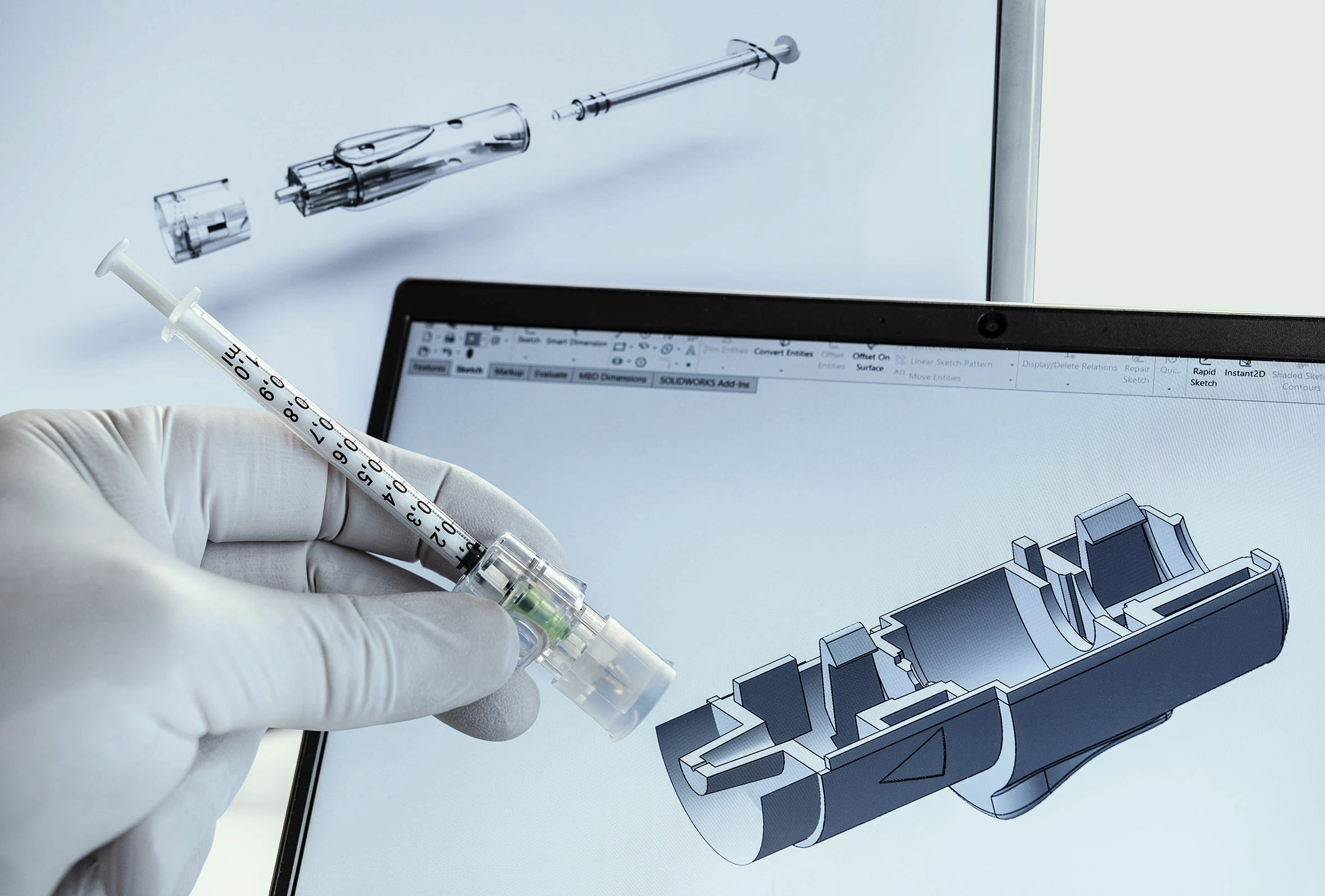
Life Sciences & Medical
Physical products for medical devices, diagnostics, biotech tools, and laboratory systems in regulated environments
Life Sciences & Medical
Physical products for medical devices, diagnostics, biotech tools, and laboratory systems in regulated environments

Energy & CleanTech
Systems and components for sustainability, environmental monitoring, and energy generation, storage, and control
Energy & CleanTech
Systems and components for sustainability, environmental monitoring, and energy generation, storage, and control

Industrial & Robotics
Physical products for machines, robotic systems, and production equipment that performs reliably at modern manufacturing scale
Industrial & Robotics
Physical products for machines, robotic systems, and production equipment that performs reliably at modern manufacturing scale
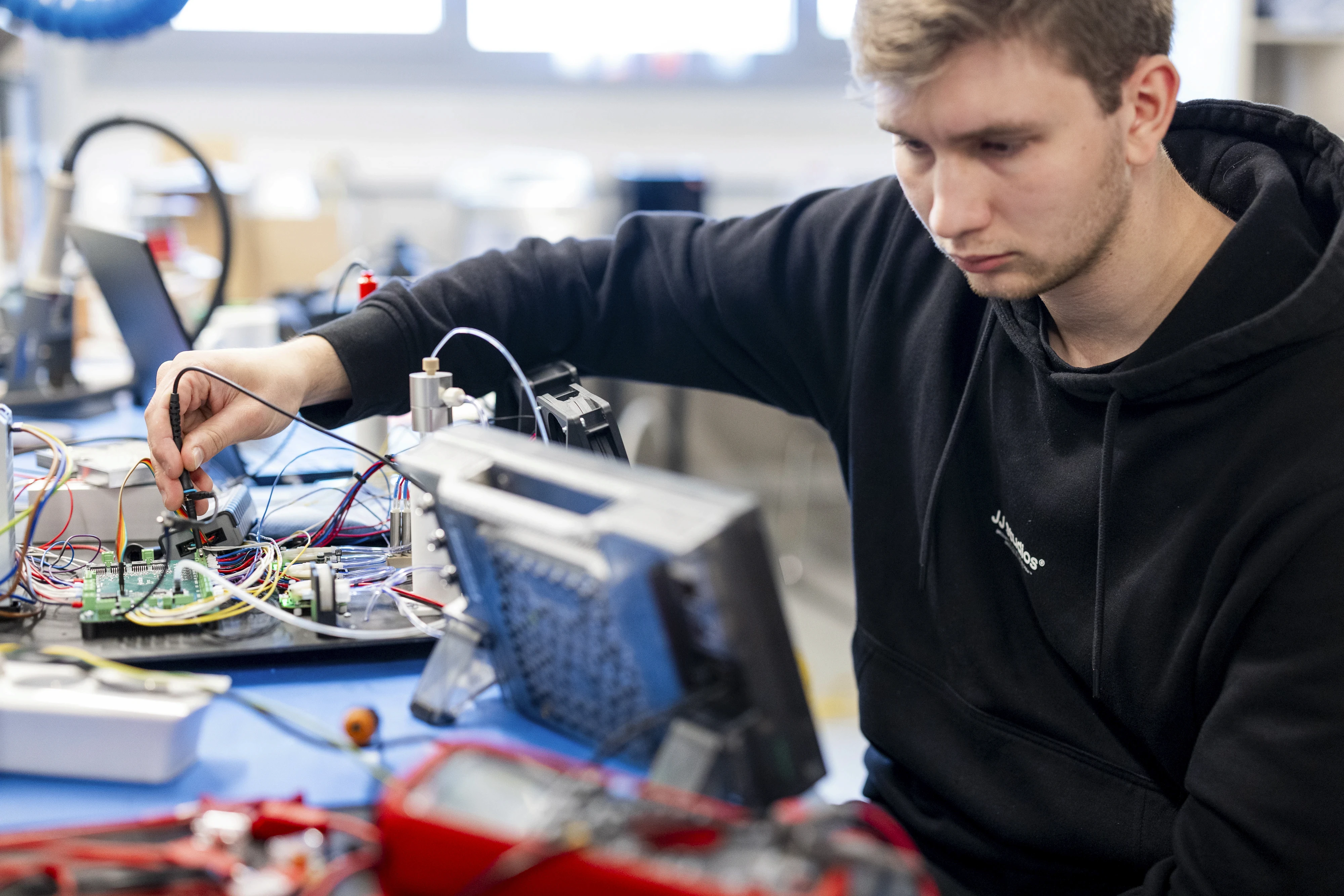
Consumer Electronics
Physical product design for connected products, where seamless UX, manufacturing readiness and global compliance matter
Consumer Electronics
Physical product design for connected products, where seamless UX, manufacturing readiness and global compliance matter

Science & Instrumentation
Precision physical products for scientific research, lab automation, and instrumentation where accuracy and repeatability matter
Science & Instrumentation
Precision physical products for scientific research, lab automation, and instrumentation where accuracy and repeatability matter
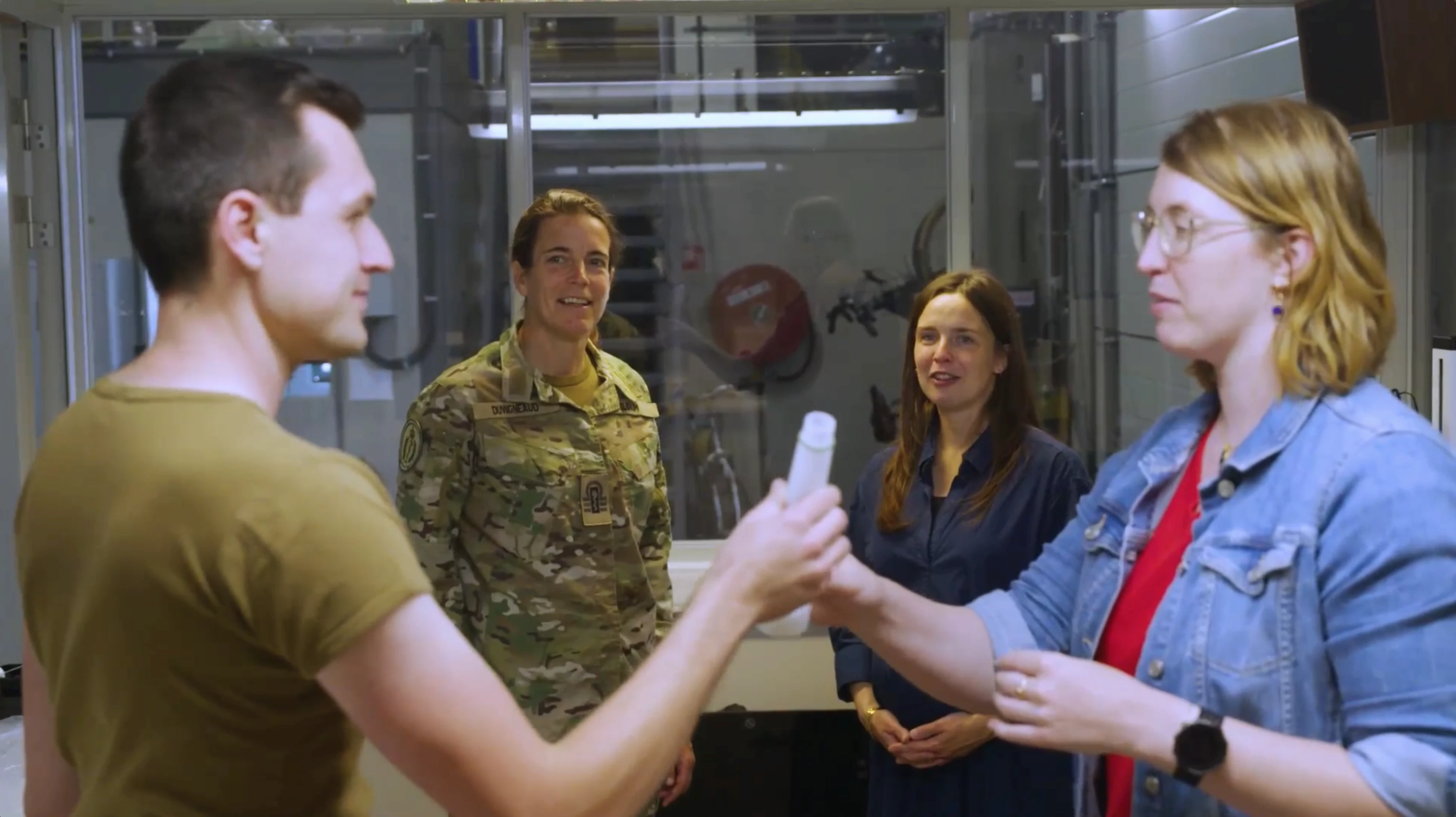
Aerospace & Defence
Physical products for aerospace, defence, and security applications where reliability, certification, and discretion are paramount
Aerospace & Defence
Physical products for aerospace, defence, and security applications where reliability, certification, and discretion are paramount
Wonderful ideas, engineered from sketch to scale
Wonderful ideas, engineered from sketch to scale
Wonderful ideas, engineered from sketch to scale
Wonderful ideas, engineered from sketch to scale

© 2026 Voxdale BV
© 2026 Voxdale BV
© 2026 Voxdale BV