
Voxdale, the Innovation Factory: “We do what Elon Musk does: shoot something into the air and see what goes wrong”
•
4 min read
Hardware is hard
What feels routine to us can look remarkable from the outside, and when De Tijd walked through our doors, they captured that perspective perfectly, describing Voxdale as a blend between a tinkerer’s lab, an industrial hall, and a dream factory.
In the manufacturing world, the motto is: hardware is hard. Mistakes are expensive. “In software, if something goes wrong you adjust the code — at worst, a customer might refuse to pay for a month. In hardware, a small production error can bankrupt you.”
Take Loop, the earplug company that came to Voxdale. “Those earplugs don’t look complex, but you need to make hundreds of decisions: how to produce, what scale — 100,000 or 10 million units — which mold, which material? Every material deviates in shape, but the 15 components must always click together within less than a tenth of a millimeter. If the product doesn’t meet expectations, customers don’t return.”
Another example: a finger-prick device for blood samples, developed with Antwerp’s Institute of Tropical Medicine for use in remote regions. “In our first rough prototype, the size didn’t fit women’s hands. Now we’re working with three sizes. Because we adjusted quickly, it won’t end up as an unused product.”
Hardware is hard
What feels routine to us can look remarkable from the outside, and when De Tijd walked through our doors, they captured that perspective perfectly, describing Voxdale as a blend between a tinkerer’s lab, an industrial hall, and a dream factory.
In the manufacturing world, the motto is: hardware is hard. Mistakes are expensive. “In software, if something goes wrong you adjust the code — at worst, a customer might refuse to pay for a month. In hardware, a small production error can bankrupt you.”
Take Loop, the earplug company that came to Voxdale. “Those earplugs don’t look complex, but you need to make hundreds of decisions: how to produce, what scale — 100,000 or 10 million units — which mold, which material? Every material deviates in shape, but the 15 components must always click together within less than a tenth of a millimeter. If the product doesn’t meet expectations, customers don’t return.”
Another example: a finger-prick device for blood samples, developed with Antwerp’s Institute of Tropical Medicine for use in remote regions. “In our first rough prototype, the size didn’t fit women’s hands. Now we’re working with three sizes. Because we adjusted quickly, it won’t end up as an unused product.”
Hardware is hard
What feels routine to us can look remarkable from the outside, and when De Tijd walked through our doors, they captured that perspective perfectly, describing Voxdale as a blend between a tinkerer’s lab, an industrial hall, and a dream factory.
In the manufacturing world, the motto is: hardware is hard. Mistakes are expensive. “In software, if something goes wrong you adjust the code — at worst, a customer might refuse to pay for a month. In hardware, a small production error can bankrupt you.”
Take Loop, the earplug company that came to Voxdale. “Those earplugs don’t look complex, but you need to make hundreds of decisions: how to produce, what scale — 100,000 or 10 million units — which mold, which material? Every material deviates in shape, but the 15 components must always click together within less than a tenth of a millimeter. If the product doesn’t meet expectations, customers don’t return.”
Another example: a finger-prick device for blood samples, developed with Antwerp’s Institute of Tropical Medicine for use in remote regions. “In our first rough prototype, the size didn’t fit women’s hands. Now we’re working with three sizes. Because we adjusted quickly, it won’t end up as an unused product.”
Top secret tests
Inside Voxdale, workshops are filled with 3D printers, CNC milling machines, laser cutters, and boxes of components, wires, and screws. Some prototypes are hidden behind black curtains: “Top secret.”
One is for Defense: drones suspended by ultrathin glass fiber cables. “We managed to save a few grams of weight, allowing drones to fly several kilometers further or carry extra payload. At the front line, that makes a real difference.”
Top secret tests
Top secret tests
Why big companies struggle with innovation
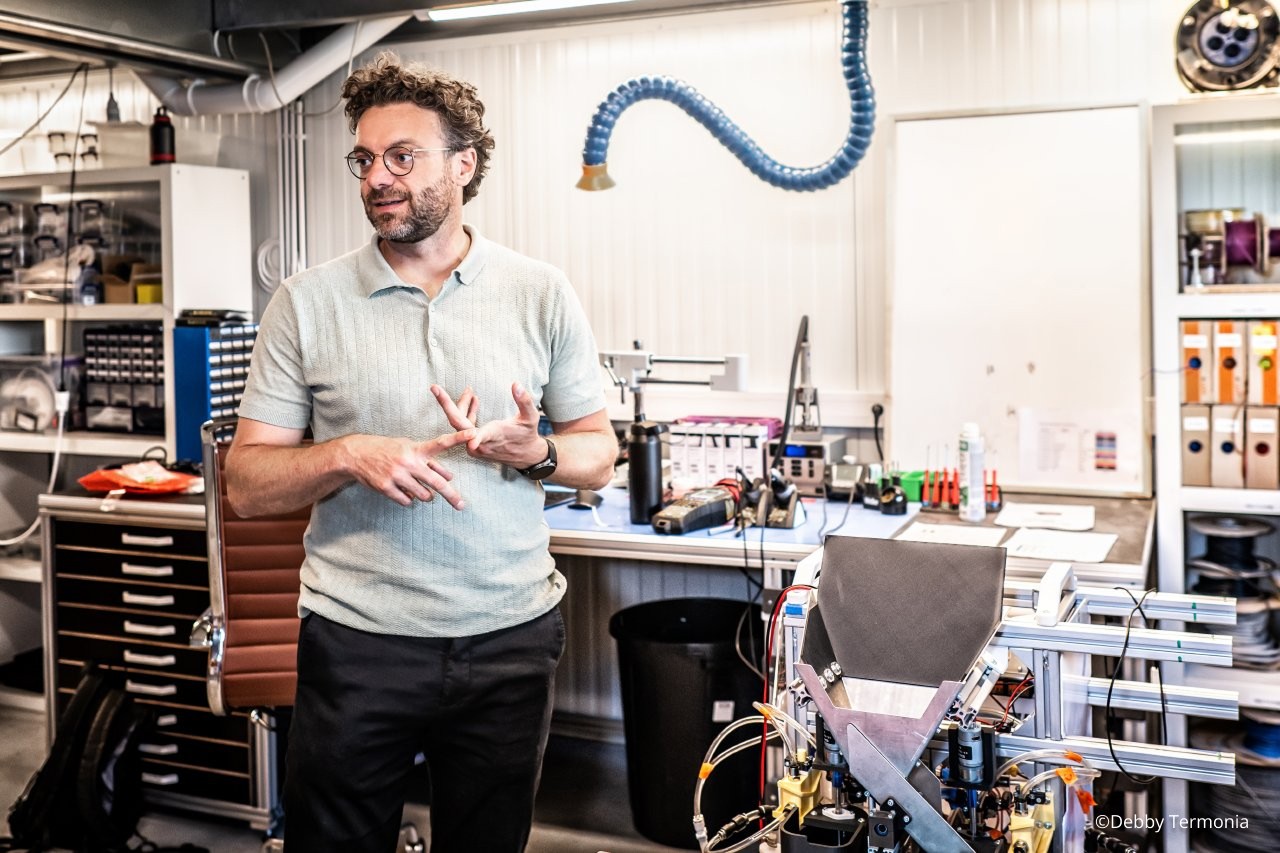
Tim Dieryckx, Voxdale’s CEO, is often asked why large corporations struggle to innovate.
“Because innovation rarely sits at the top. It’s buried three or four layers down. Those people’s horizon is two to three years — far too short to drive real change. So big companies mostly repeat what has been done and try to improve it.”
Radical innovation only comes in a crisis or with a CEO who relentlessly pushes it. “Some big companies succeed — even in Belgium — but they’re exceptions. Turning a tanker into a speedboat is hard. Too much red tape.”
Why big companies struggle with innovation
Why big companies struggle with innovation
From Saudi Aramco to European scale
“They know oil will run out one day. They want to diversify, but realized they can’t innovate quickly enough themselves. That’s why they came to us.”
That’s why companies looking for “speedboats” end up in Wijnegem. Even Saudi Aramco came.
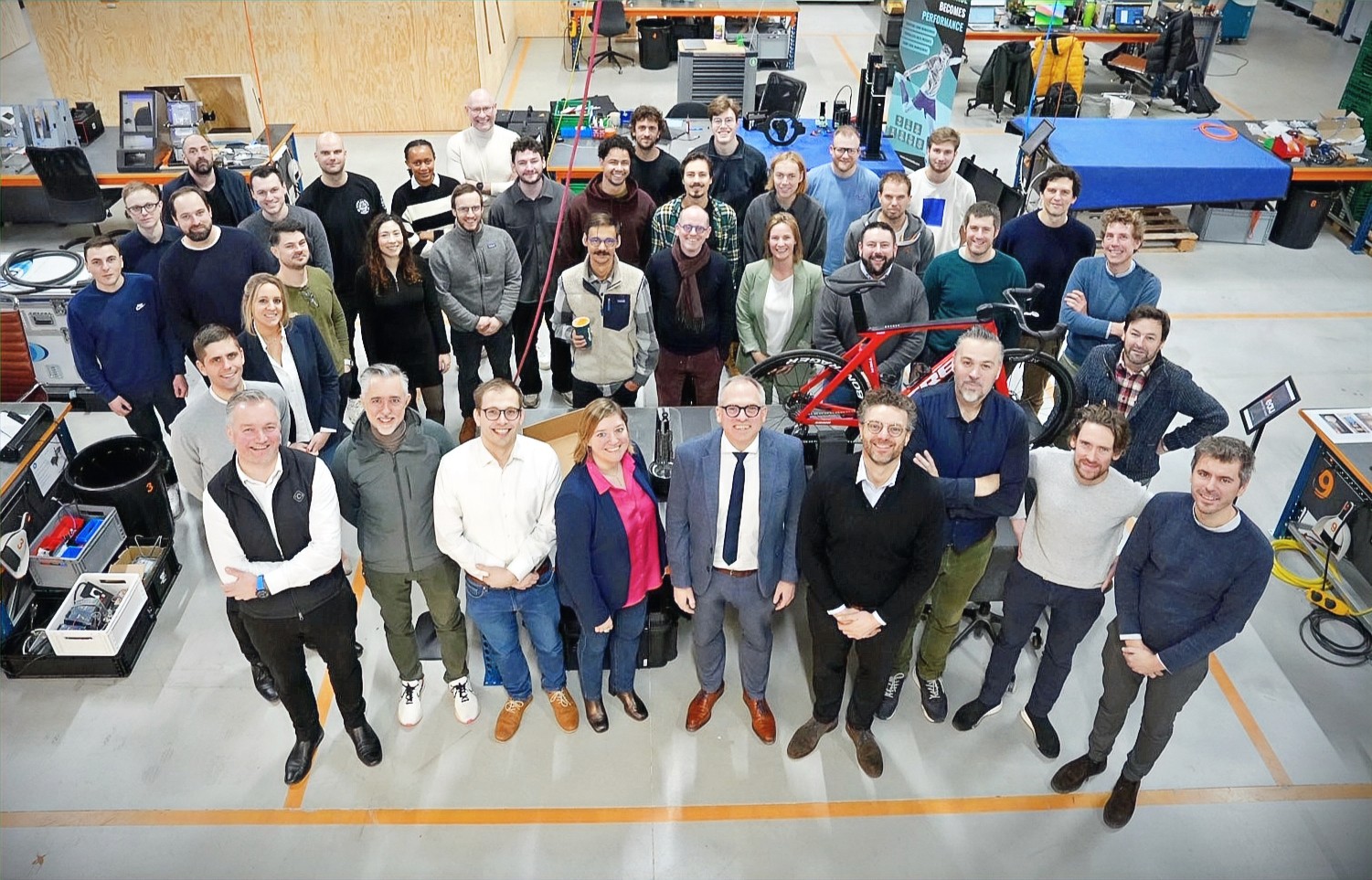
Voxdale’s competitors include Verhaert (East Flanders) and Comate (Leuven, backed by Marc Coucke). Both are larger, but Voxdale nearly doubled revenue in five years to around €4 million. “Good competitors are a blessing,” says Dieryckx. “The next step is to compete with European players. We want to be the best.”
From Saudi Aramco to European scale
From Saudi Aramco to European scale
Test, fail, repeat
The 38-strong team advances by constant testing. “Test, fail, try again. Only then do you move forward.
The human brain learns faster by seeing results than by working on endless hypotheses. That’s why SpaceX launches rockets: fire it up and see what goes wrong. If we test something and nothing fails, we probably waited too long to test.”
Examples abound: Tesla lost years (and money) mastering car production. Medtech prototypes that work in the lab at €10,000 each may fail 70% of the time in preproduction, suddenly costing €35,000 per working device. “Catching errors quickly requires a diverse team. The faster you remove a flaw, the cheaper it is.”
Test, fail, repeat
Test, fail, repeat
From academic labs to the battlefield
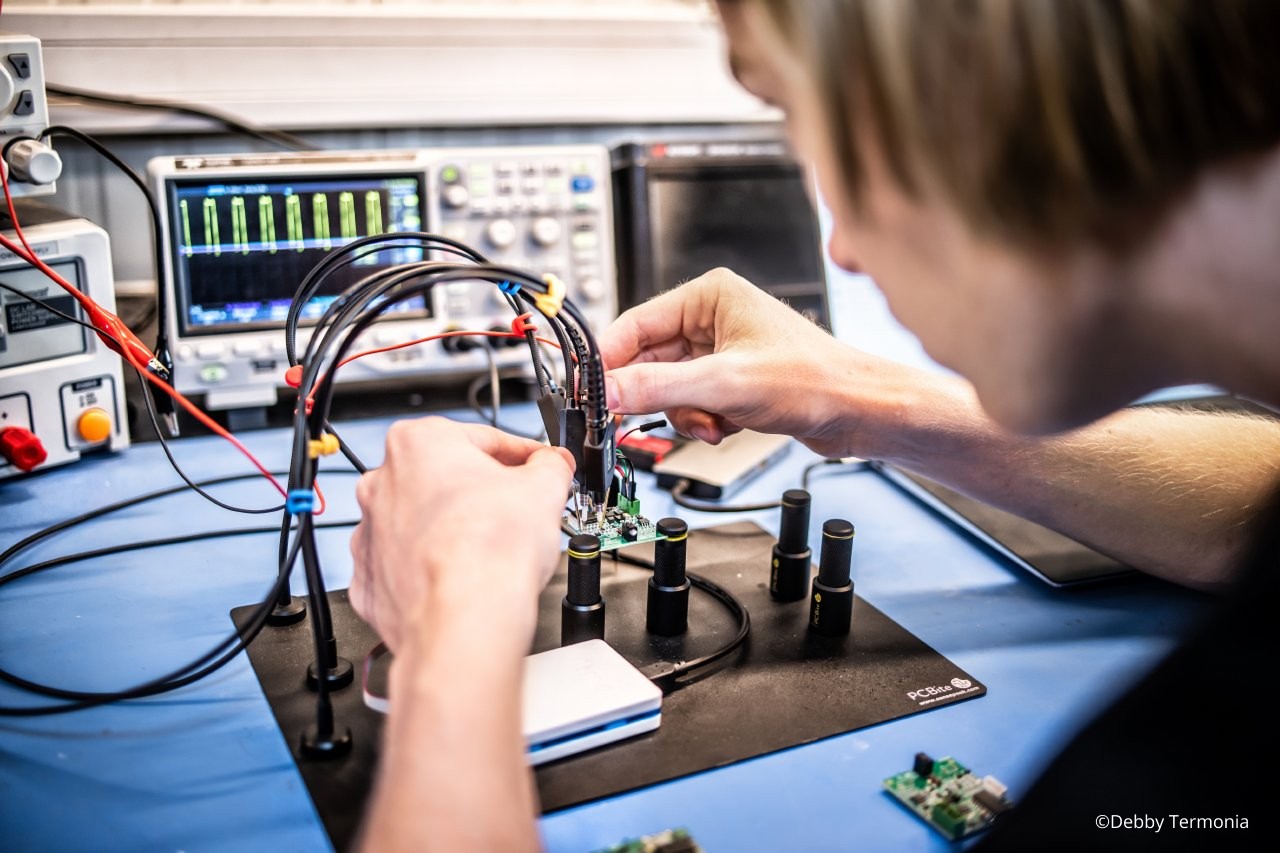
Voxdale increasingly converts academic research into real products or spin-offs. Clients include VITO (Flemish Institute for Technological Research) and Germany’s Fraunhofer Institute.
One project with UGent: a soil analysis device that attaches to a tractor to measure nitrates. “Farmers often overfertilize because under-fertilisation is riskier for crops. But too much harms water quality. Our device could cut CO₂ and pollution per field significantly.”
Another: packaging for biomedical tests with Argenx and lab partner Cerba, aiming to reduce medical waste. The biomedical sector is a steady client — Voxdale has already spun out startups like Novosanis (diagnostic devices, sold) and Idevax (needle-free vaccines tested with robotic injectors).
From academic labs to the battlefield
From academic labs to the battlefield
Balancing clients: startups, corporates, and institutes
When Dieryckx became CEO five years ago (joining with investors Neomis and Tilleghcm), Voxdale shifted strategy. Founder Koen Beyers stepped aside to focus on startups.
“We now take relatively fewer startups to reduce risk. Startups are fun, but too dependent on fundraising, which is tough in Europe right now. Research institutes are steadier. Corporates are clients too — from Airbus to Pfizer — but very sensitive to market cycles. After COVID, the energy crisis, inflation, and US tensions, we felt it all. In 2023, we dipped below zero, partly from client bankruptcies and our own fast growth. Today, we’re profitable again.”
Balancing clients: startups, corporates, and institutes
Balancing clients: startups, corporates, and institutes
The vision
Walking through Voxdale’s hall — part workshop, part dream factory — Dieryckx points proudly at Loop earplugs, Cowboy e-bikes, and countless prototypes.
His philosophy: “One product is easy. Making the right product and then producing one million is incredibly hard. That’s why we exist: to make sure the right product, with the right features, reaches the market faster.”
Originally published in De Tijd on 13 September 2025. Written by Sofie Vanlommel.
You can read the original article on the De Tijd website here.
The vision
The vision
Continue reading
Continue reading




Wonderful ideas, engineered from sketch to scale
Wonderful ideas, engineered from sketch to scale
Wonderful ideas, engineered from sketch to scale
Wonderful ideas, engineered from sketch to scale
© 2026 Voxdale BV
© 2026 Voxdale BV
© 2026 Voxdale BV